

What Is AI Bubble
Everywhere you look lately, someone is asking the same question: what is ai bubble talk all about, and should anyone actually worry? One camp sees overpriced companies, breathless headlines and spending that can’t possibly pay off. The other camp shrugs and points to real products, real customers and revenue that’s genuinely growing. Both sides sound convincing, which is exactly why the argument won’t go away.
Before picking a side, it helps to understand what a bubble even is, who stands where in this debate, and what evidence would settle it. That’s also easier if you know who owns ai in the first place, because so much of this conversation is really about a handful of very large companies and the money moving between them.
In short: An AI bubble would mean the money and excitement around artificial intelligence have raced far ahead of what the technology can actually deliver in profit. Critics point to sky-high valuations, enormous spending on data centers and chips, and hype that outruns revenue. Optimists answer that demand is real, earnings are growing, and the infrastructure being built will stay useful for decades. Nobody can prove either case yet — the honest answer is that the signs worth watching are earnings versus spending, real adoption, and whether anyone starts defaulting on the bills. The infrastructure debate is covered in Why Are Data Centers Controversial.
What People Mean by a “Bubble” in Simple Terms
A bubble, in plain language, is what happens when the price of something climbs far above what it’s actually worth, mostly because people believe they can sell it to someone else for even more later. The belief feeds itself. Prices rise, headlines celebrate the rise, more buyers rush in, and prices climb again — until confidence cracks, and then the fall is usually much faster than the climb ever was.
History has a few famous examples people reach for: housing booms, dot-com stocks, tulips if you go back far enough. The pattern underneath is always similar — a genuinely new and exciting thing arrives, the excitement gets priced as if success were guaranteed, and the gap between the story and the reality grows too wide to hold.
Here’s the part that gets forgotten, though. The underlying technology in a bubble is often real and important. Railways changed the world and still bankrupted plenty of early investors. The internet changed everything and still produced a painful crash on the way. So “it’s a bubble” and “the technology matters” can both be true at the same time, and that tension sits right at the heart of the AI debate.
What the Bubble Warners Point To
The skeptical case isn’t hard to follow, and much of it is about scale — numbers so large they stop feeling real.
- Very high company valuations. Some AI companies are valued as if they already dominate markets that are still taking shape. When a young company with modest revenue is priced like a mature giant, there’s very little room for disappointment.
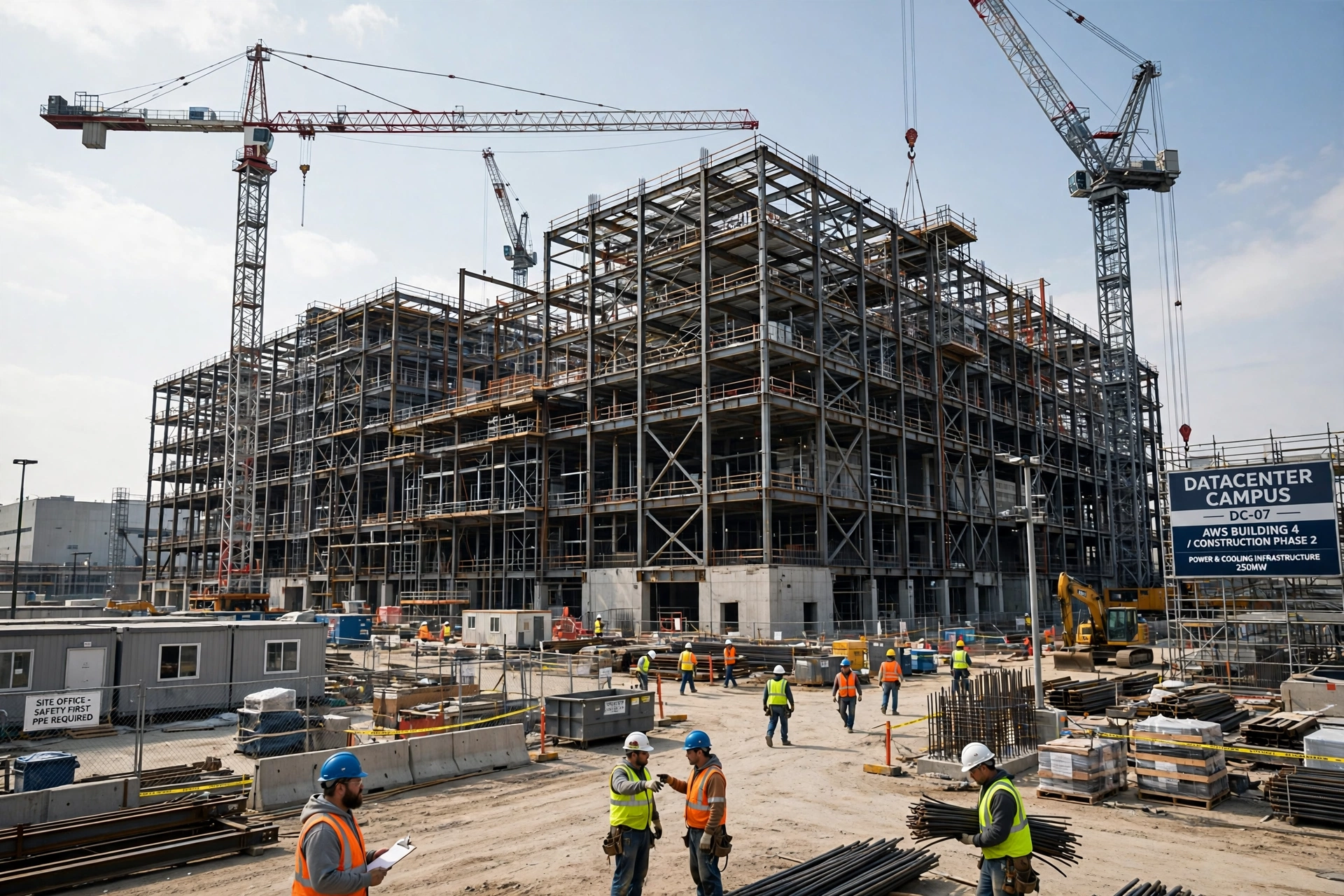
- Huge spending on data centers and chips. Enormous sums are pouring into computing infrastructure — vast facilities, power-hungry hardware, specialized processors. Spending itself isn’t the problem; the question is whether the income ever catches up with it.
- Money circulating between a few big firms. A noticeable share of the spending loops around a small circle of technology giants — one company invests in another, which then spends the money back on the first company’s cloud or chips. Critics say this makes demand look bigger and healthier than it really is.
- Hype running ahead of revenue. Plenty of AI products are launched with enormous fanfare and very little income behind them. Warners argue that demos are cheap and durable profits are not, and that vast numbers of users paying nothing is not the same as a business.
Put together, the warning sounds like this: the industry is building cathedrals on the assumption that everyone will show up, and assumptions that big have a way of breaking all at once.
What the Other Side Argues
The optimistic case is not just blind faith, either. It rests on things you can actually point to.
- Real demand, not just curiosity. Businesses are paying for AI tools, subscriptions are growing, and cloud providers report customers queuing for computing capacity. People aren’t only trying AI — many are renewing, expanding and building it into daily work.
- Real revenue growth. Unlike some past manias built on companies with no income at all, the biggest players in AI are established firms with large, growing earnings. Supporters say that changes the picture completely: this is expansion funded by profitable companies, not a collective daydream.
- Infrastructure that stays useful. A data center doesn’t evaporate if one product fails. Computing capacity, power connections and networks can serve the next wave of software, whatever it turns out to be. Even in a downturn, the optimists argue, the build-out leaves something durable behind.
- A technology that’s visibly improving. Models keep getting more capable, and new uses keep appearing — in coding, research, medicine, customer support and creative work. When people debate what is the purpose of ai, the list of practical answers keeps getting longer, which supporters read as a sign of substance rather than froth.
Their bottom line: expensive is not the same as imaginary, and a young industry always looks overheated from certain angles. For a concrete multi-agent example, see How AI Agent Swarms Behave in Minecraft.
Why the Talk Spiked Today
Bubble talk never fully goes away, but it surges in waves — and today is one of those waves. A fresh round of headlines and analyst commentary has pushed the phrase back into feeds and group chats, and this time a lot of the chatter swirls around China.
Reports and market commentary have been circulating claims and worries that parts of China’s AI boom may be running ahead of reality — state-backed enthusiasm, crowded investment in similar projects, and questions about whether all of it can pay off. Phrases like “the bubble has already burst” bounce around social posts. It’s worth being careful here: what’s verified is that the chatter exists and is loud, not that any particular claim in it is correct. Much of it is opinion, rivalry and market positioning dressed up as certainty.
The timing adds fuel. News of a major AI company preparing to go public — the kind covered in explainers on what is anthropic ipo news actually means — tends to pull bubble questions into the open, because a public listing forces hard numbers into daylight. At the same time, every new model launch, like the wave of attention around tools such as Kimi AI, reminds everyone how fast this field moves and how much money is chasing it. Fast money plus big questions equals bubble talk.
The Two Cases Side by Side
| Argument | What bubble warners say | What the other side says |
|---|---|---|
| Valuations | Prices assume a perfect future and leave no room for mistakes | Leading firms back the prices with large, growing earnings |
| Infrastructure spending | The build-out is far bigger than today’s income can justify | Capacity is scarce, demand is real, and the assets stay useful |
| Money between big firms | Circular deals inflate the appearance of demand | Partnerships and investment are normal in a young industry |
| Products and revenue | Hype and free users are being mistaken for businesses | Paying customers, renewals and adoption keep climbing |
| The technology itself | Capability is impressive but may plateau below the promises | Capability keeps improving and new uses keep appearing |
Read down that table and you’ll notice something: both columns are describing the same facts. The disagreement is about what those facts mean and what happens next — which is why confident predictions, in either direction, deserve a raised eyebrow.
Signs That Would Actually Settle the Argument
If you want to cut through the noise, watch for evidence rather than opinions. A handful of signals would genuinely confirm or disprove the bubble story over time.
- Earnings versus spending. If revenue from AI products keeps climbing toward the level of investment, the bubble case weakens. If spending keeps soaring while income trails far behind, it strengthens.
- Real adoption inside companies. Pilots are easy; renewals are the test. Businesses quietly cancelling AI tools would be a warning sign. Businesses expanding them into core operations would be the opposite.
- Defaults and write-downs. Bubbles usually reveal themselves through failures — projects abandoned, loans unpaid, expensive facilities sitting idle. A wave of those would be hard evidence. Their absence matters too.
- Prices calming down on their own. Sometimes an overheated market cools gradually as reality catches up with expectations. A soft landing is possible, and it would mean the “bubble” was more of a frothy phase than a trap.
None of these signals moves in a straight line, and all of them take time to read. Anyone who claims certainty today is selling something. Failures can also be cyberattacks, as in Military Commissary Freezer Cyberattack.

How to Think About It Without Losing Your Head
A sensible way to hold this debate is to separate three questions that usually get mashed together. Is AI a real and important technology? Almost certainly yes. Are some prices and promises running ahead of reality? Quite possibly — that happens in every gold rush. And will every company and project survive? Definitely not, and that was never the test. Theory questions also arise in AI Disproves Exponential Time Hypothesis.
It’s also worth remembering what this article is and isn’t: it’s an explainer, not financial advice, and nobody should make money decisions based on a trend word in their feed. The wiser move is the boring one — watch the earnings, watch the adoption, and let the evidence accumulate. Bubbles, if that’s what this is, don’t pop on schedule. And booms that aren’t bubbles don’t announce themselves either. The signs above will tell the story eventually; they just refuse to be hurried. Education is one area where new uses keep appearing, as covered in AI in Education.
Frequently Asked Questions
An AI bubble would mean that the money, prices and excitement around artificial intelligence have grown far beyond what the technology can currently deliver in real profit. People keep investing because prices keep rising, not because the underlying businesses earn enough to justify them. If confidence breaks, prices can fall very fast.
Worries have grown because of very high company valuations, enormous spending on data centers and chips, and money circulating between a small circle of big tech firms. Commentators also point to products with huge hype and modest revenue. A fresh wave of headlines, including chatter about China’s AI boom, has pushed the debate back into the spotlight.
They argue that demand is real and measurable — businesses are paying for AI tools, subscriptions and cloud capacity keep growing, and the biggest companies in the space are profitable with rising earnings. They also note that data centers and networks remain useful even if individual products fail, unlike the worthless paper left behind by pure speculation bubbles.
Reports and commentary claim parts of China’s AI sector may be overheated, and that conversation is genuinely loud right now. But loud chatter is not proof: much of it mixes opinion, market rivalry and incomplete information. The careful position is that the worries are widely discussed, while the underlying claims remain unproven either way.
The strongest evidence would be a pattern of failures — companies defaulting on the debt behind the build-out, expensive data centers sitting underused, businesses cancelling AI tools instead of renewing them, and earnings stuck far below the level of spending. A few bad headlines wouldn’t prove it; a sustained pattern would.
This article is an explainer, not financial advice, and bubble debates are a poor basis for quick decisions. Historically, both panicking out of a real boom and ignoring genuine warning signs have cost people money. If the question matters to you personally, measured information and a qualified financial adviser are worth far more than trend-driven headlines.

Hamad Arshad writes and edits AI Next Top from Rahim Yar Khan, Pakistan. He has worked in SEO and digital marketing for over 7 years and started this site to explain AI tools and news in plain language for non-technical readers. Every guide here is checked against the real tool before it is published.








Leave a Reply