
Who Owns AI
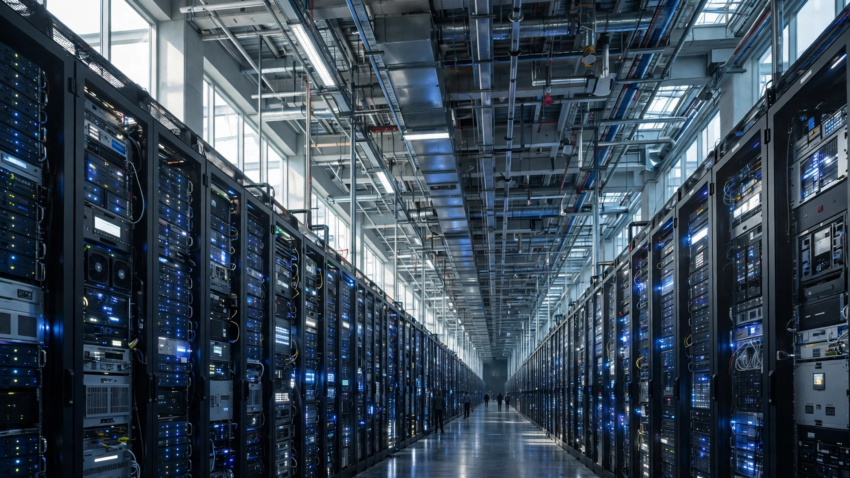
Ask a simple question — who owns AI? — and you quickly find there is no simple answer. A chatbot feels like one thing, a single product you open and use. In reality it is several things stacked together: a model built by a company, trained on data gathered from millions of people, running on computers most of us will never see. Each layer has a different owner, and some layers have no clear owner at all. If you have ever looked at the challenges generative AI faces with respect to data, you already know the foundation is messier than the polished apps suggest.
That messiness is not a reason to shrug and move on. Ownership decides who gets paid, who gets blamed when something goes wrong, and who gets to set the rules for a technology that now sits inside schools, offices, hospitals and homes.
In short: The companies that build AI models generally own those models. What AI produces is usually governed by each tool’s terms of service rather than clear copyright law, and the ownership of training data is one of the most contested questions in technology today. A small number of large companies control most of the powerful models, the data and the computing power — and that concentration is why the question matters. Theory questions also arise in AI Disproves Exponential Time Hypothesis.
First, What Does “Owning AI” Even Mean
When people say AI, they could mean at least three different things, and each one has its own ownership story.
- The model itself — the trained system, with its billions of internal settings, that actually generates answers, images or code.
- The output — the essay, picture, song or summary the model produces when you ask.
- The ingredients — the training data, the chips and data centers, and the software used to build and run the model.
Confusing these layers is where most arguments about AI ownership go wrong. Someone can own the model but not the output. A company can control the service without owning the computers it runs on. And the people whose words and pictures trained the system may own their original work while having almost no say in how it is used. Keeping the layers separate makes the whole picture much clearer.
Who Owns the AI Models
This is the least mysterious layer. The company that builds and trains a model generally owns it, the same way a software company owns its programs. The model is its product, its trade asset, and often its most closely guarded secret.
For the big commercial systems, that means a handful of well-known technology companies and well-funded AI labs. They employ the researchers, pay for the training runs, and decide everything about the model: what it can do, what it refuses to do, how much it costs, and when an older version gets switched off.
Users, even paying ones, are almost never owners here. When you subscribe to an AI service, you are renting access to someone else’s model. If the company changes the model, raises the price or shuts the service down, the thing you relied on can change or vanish overnight. That is worth remembering if your work depends on one tool. Building on top of free AI agents and open tools is one way people hedge against that dependence, though it comes with trade-offs of its own. New apps are also reviewed, such as Meta Muse AI App.
Who Owns What AI Creates
Here is where it gets genuinely unsettled. Suppose you prompt a tool and it produces a logo, a poem or a product description. Who owns that output — you, the company behind the tool, or nobody at all?
In practice, the first answer comes from the tool’s terms of service, not from a courtroom. Many popular services state that, as between you and the company, you own the output and may use it commercially. Others place limits, especially on free plans. Reading those terms matters more than most people realize, because they are the rules you actually agreed to.
Copyright law is the second, murkier answer. In many places, copyright has traditionally protected works created by humans. Material generated entirely by a machine sits awkwardly with that idea, and regulators and courts are still working through where the lines fall. A work with substantial human involvement — your own editing, arrangement and creative choices on top of AI output — generally stands on firmer ground than something produced by a single unedited prompt.
So the honest position looks like this:
- Your contract with the tool sets the day-to-day rules for using output.
- Whether pure AI output can be copyrighted at all is an open question in much of the world.
- The more genuine human creativity you add, the stronger your claim usually is.
Anyone selling AI output commercially should treat this area as unsettled and keep records of their own creative contribution. Business publishing is examined in The Real Impact of Generative AI on Business Publishing and Promotion (From Someone Who Lived Through the Shift).
Who Owns the Training Data
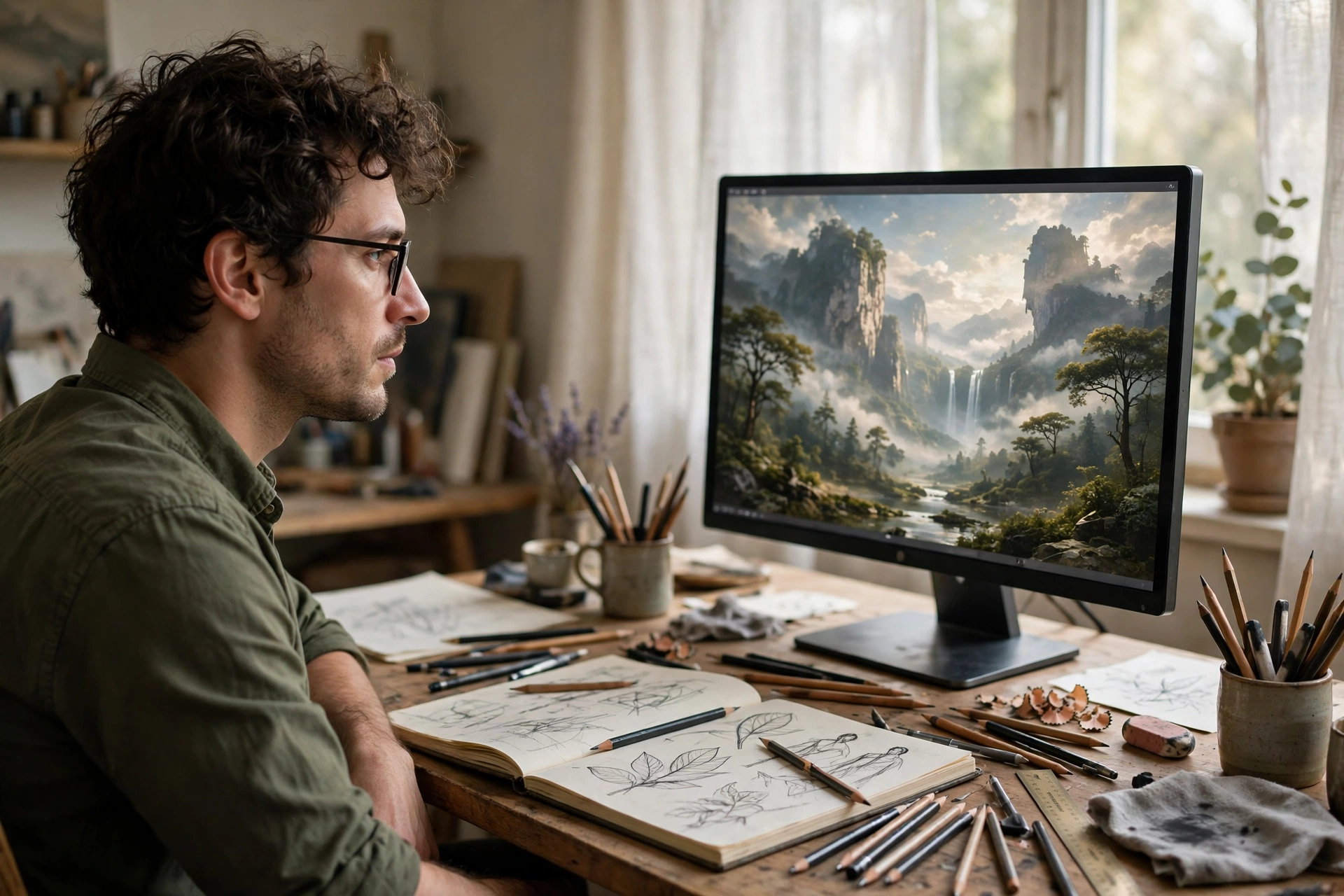
If output ownership is unsettled, training data ownership is a full-blown argument. Models learn from enormous collections of text, images, code and audio. Much of that material was created by other people — writers, photographers, programmers, forum posters — long before anyone imagined it would train an AI.
The general picture breaks into a few camps. Some data is licensed: companies pay publishers, stock libraries and platforms for the right to train on their collections. Some data is public domain or openly licensed, free for anyone to use. And a large amount sits in a grey zone, where material was publicly visible online but its creators never explicitly agreed to AI training.
Writers, artists and media companies have pushed back, arguing that visibility is not consent, and a number of legal disputes over this question are working their way through the system. AI companies tend to argue that training is a transformative use, more like a person reading and learning than copying. There is no settled global answer yet, and anyone who tells you otherwise is skipping the hard parts.
Understanding the different types of AI helps here, because not every system learns the same way or from the same kind of data — but every learning system has to learn from something, and that something always belonged to someone first.
Open-Weight Versus Closed Models — Who Really Controls Them
Not every model sits behind a company’s locked door. Some makers release their models openly, letting anyone download and run them. Others keep everything closed, offering access only through their own apps and paid interfaces. The interesting question is what “open” really gives you.
| What | Who usually owns or controls it | The grey area |
|---|---|---|
| The AI model | The company or lab that built and trained it | Open releases blur this — you can hold a copy but not the original |
| AI-generated output | Often assigned to the user by the tool’s terms | Copyright protection for pure AI output is unsettled |
| Training data | A mix of licensors, the public domain and web creators | Whether scraping public content for training is fair or lawful |
| The computing power | Large cloud and chip companies | Even “independent” AI often runs on a giant’s hardware |
| An open-weight model you download | You control your copy and how you run it | The license can still limit uses, and the maker controls future versions |
With a closed model, the company controls everything: the model, the updates, the safety rules and the off switch. With an open-weight model, you control your copy — you can run it on your own machines and it cannot be taken back — but you still did not create it, the license sets boundaries, and the original maker decides what the next version looks like.
Open sounds like freedom, and in important ways it is. It lets researchers inspect systems, lets small teams build without permission, and stops any one company from holding all the keys. But openness does not transfer ownership of the original work, and it does not answer the training data question at all.

Why It Matters That a Few Companies Own Most of AI
Step back and a pattern appears. The most powerful models come from a small circle of companies. The biggest data collections sit with a small circle of platforms. The advanced chips and vast data centers needed to train frontier systems belong to an even smaller circle. Underneath much of this sits an idea explained in our guide to what a neural network is — these systems improve with scale, and scale is exactly what only the biggest players can easily afford. Investor moves in AI stocks are also covered in Cathie Wood Tempus AI Stock Purchase.
Concentration has real consequences:
- Prices and access — a few sellers can set the terms everyone else accepts.
- Rules and refusals — private companies decide what AI may and may not help with, choices that affect millions.
- Fragility — when businesses, schools and governments all depend on the same few providers, an outage or policy change ripples everywhere.
- Whose values — the judgments baked into a model reflect its maker’s culture, language and priorities.
None of this requires villainy. It is the natural result of a technology that is extraordinarily expensive to build at the frontier. But it explains why governments are paying attention, why open models have passionate supporters, and why “who owns AI” is really a question about power, not paperwork.
What This Means for Everyday Users
You do not need to be a lawyer to act sensibly in this landscape. A few habits cover most of the risk: Security incidents show the stakes, as in Military Commissary Freezer Cyberattack.
- Read the output and data terms of any AI tool you rely on, especially for paid work.
- Do not paste confidential material into services whose data practices you have not checked.
- Keep your own drafts and edits — your human contribution is both good practice and your strongest ownership claim.
- Avoid building your whole livelihood on one closed service if you can help it.
The law will keep evolving, and some of today’s grey areas will eventually get firm answers. Until then, the practical rule is simple: the model belongs to its maker, the output mostly follows the terms you accepted, and the data question belongs to everyone — because, in a sense, it came from everyone. Other prediction claims are examined in Ai 2d Pasti 100 Garansi Angka control.
Frequently Asked Questions
No single person or company owns “AI” as a whole. Individual models are owned by the companies and labs that build them, the output those models produce is mostly governed by each service’s terms, and the training data behind them belongs to a mix of licensors, platforms and everyday creators. Ownership in AI is a stack of different answers, not one answer.
Often, yes in practice — many services assign output rights to the user in their terms, so you can use what you generate, including commercially. But that is a contract answer, not a settled copyright answer. Purely machine-generated material may not qualify for copyright protection in many places, and your own editing and creative input strengthen your position considerably.
It depends entirely on the service and the plan you are on. Some tools state they may use inputs to improve their models, others promise not to, and paid or business tiers often carry stronger privacy commitments. This is one of the most important lines to check in the terms before sending anything sensitive.
A closed model stays on the maker’s servers and you access it only through their app or interface, under their control. An open-weight model can be downloaded and run on your own hardware, so you control your copy and it cannot be withdrawn. Open still does not mean ownerless — licenses set limits, and the maker controls future versions.
There is no single owner. Training collections combine licensed material, public domain and openly licensed work, and large amounts of publicly visible content whose creators never explicitly agreed to training use. Whether that last category is fair or lawful is actively disputed, and no settled worldwide answer exists yet.
Because ownership brings control over prices, access, rules and availability for a technology millions depend on. When a handful of firms own the strongest models, the biggest datasets and the computing power behind them, their decisions shape what everyone else can build and say and do with AI. That is why the ownership question draws attention far beyond the tech industry.

Hamad Arshad writes and edits AI Next Top from Rahim Yar Khan, Pakistan. He has worked in SEO and digital marketing for over 7 years and started this site to explain AI tools and news in plain language for non-technical readers. Every guide here is checked against the real tool before it is published.






Leave a Reply