

Different Types of AI
Intro
People throw the word “AI” around like it means one single thing. It doesn’t. The AI that recommends your next song, the one that beats grandmasters at chess, and the one scientists warn about in documentaries are completely different creatures — they just share a family name.
That’s why learning the different types of ai matters. Once you see how researchers sort these systems, the field gets a lot less confusing — you’ll understand why today’s chatbots feel smart but still make silly mistakes, and why the human-like AI from the movies doesn’t exist yet. Not even close.
Here’s the thing. Experts classify AI two ways. One looks at capability compared to a human mind. The other looks at function — what it can remember, whether it understands emotions, and so on. We’ll walk through both below, with examples you already know. If you’ve ever wondered how AI-generated imagery differs from traditional graphics, that gets clearer once you know these categories too.
In short: AI comes in three capability levels — narrow, general, and super — and four functional types — reactive machines, limited memory, theory of mind, and self-aware AI. Everything you use today is narrow AI, mostly running on limited memory.
What Are the Different Types of AI?
The quick answer is that AI types split two ways. By capability, there’s narrow AI (built for one task), general AI (could learn any task a human can), and super AI (beyond human ability entirely). Only the first one exists right now.
By functionality, there are reactive machines, limited memory systems, theory of mind AI, and self-aware AI. The first two are real and everywhere. The last two are still research concepts — fascinating ones, but concepts all the same.
Types of AI by Capability
Narrow AI (Weak AI)
Narrow AI is built to do one specific job, and do it well. It can’t step outside its lane. A spam filter only filters spam. A face-recognition system only recognizes faces. Ask either of them to write a poem and you’ll get absolutely nothing.
Don’t let the word “weak” fool you, though. Within their lane, these systems often outperform humans by a mile. They power your voice assistant, shopping recommendations, translation apps, bank fraud detection, and the chatbots answering customer questions at midnight. You’ve probably used a dozen narrow AI systems today without noticing one.
This is the only category of AI that exists in the real world right now. Every product and service marketed as “AI” today — every single one — is narrow AI underneath.
General AI (Strong AI)
General AI, often called AGI, could learn and reason across any domain the way a human does. Give it a problem it’s never seen, and it would work out an approach, transfer knowledge from one area to another, and adapt. It has no single lane.
Here’s the honest status update: general AI does not exist yet. Not in any lab, not in any company, nowhere. Today’s most advanced systems can look general because they’re trained on enormous amounts of data, but underneath they’re still narrow systems stitched together. They don’t truly understand what they’re doing, and they fall apart in ways a child wouldn’t. Researchers disagree wildly on when — or even if — AGI will arrive. On that much, both camps agree: we’re not there.
Super AI (Superintelligence)
Super AI goes one step further: a hypothetical system that wouldn’t just match human intelligence but surpass it in basically every way — creativity, problem-solving, social understanding, all of it. It’s the AI of science fiction, from helpful companions to runaway machines.
Its status is simple: purely theoretical. Super AI lives in philosophy papers, thought experiments, and movies. Since we haven’t reached general AI yet, superintelligence is a destination we can’t even see from where we’re standing.
Types of AI by Functionality
Reactive Machines
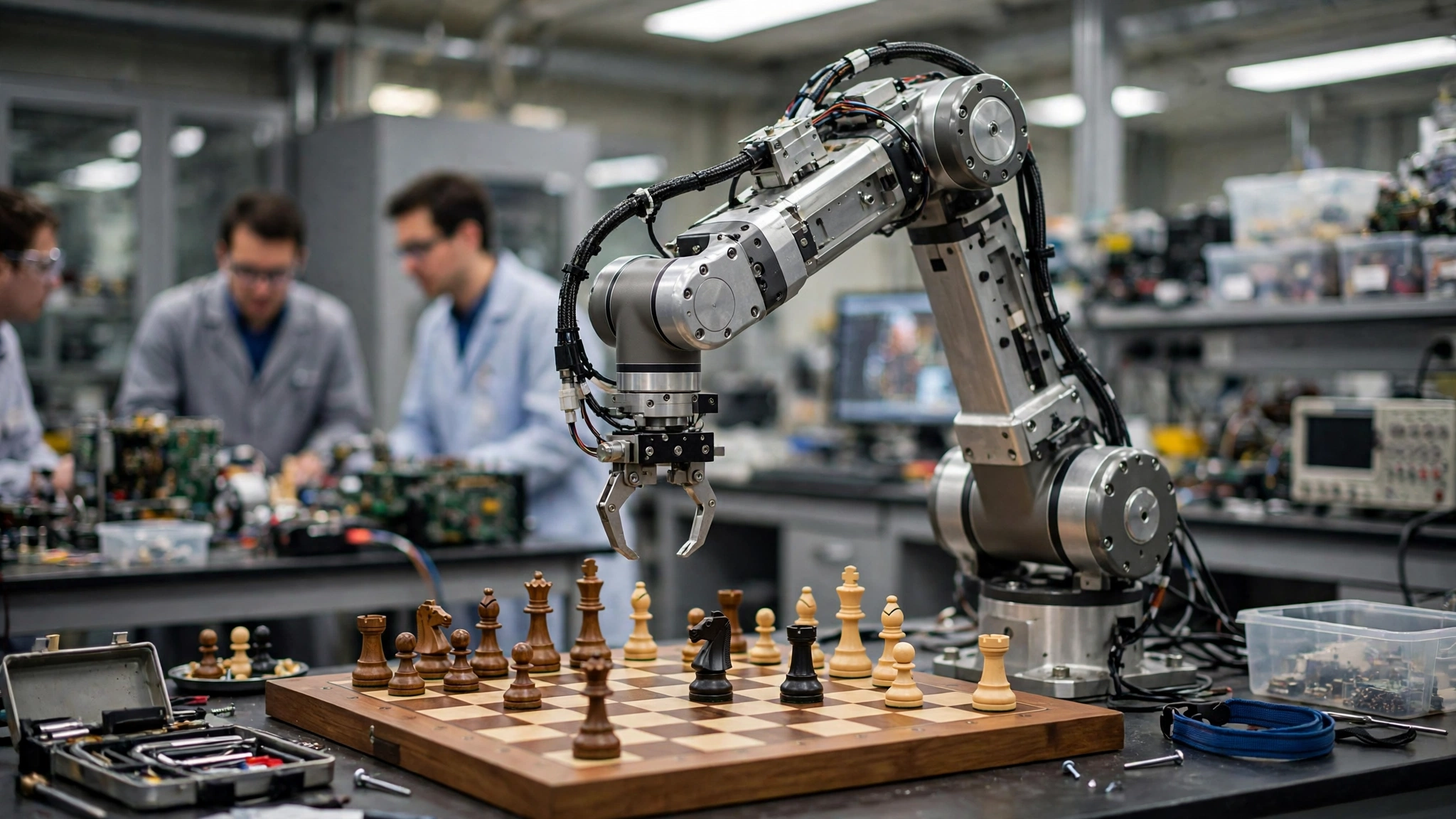
Reactive machines are the simplest form of AI. They look at what’s in front of them right now and respond — nothing more. No memory of past events, no learning from experience. Same input, same output, every time.
The famous example is IBM’s Deep Blue, the chess computer that beat world champion Garry Kasparov. Deep Blue didn’t remember previous games or get nervous about the rematch. It evaluated the current board, calculated millions of possible moves, and picked the strongest one. Brute force, no memory, no feelings.
You’ll still find reactive logic in simple systems today — basic game opponents, thermostats responding to current temperature. Limited, yes, but for a fixed job with fixed rules, that simplicity is a strength.
Limited Memory
Limited memory AI is where things get interesting — it’s the category running most of the modern world. These systems look back at recent information to make better decisions. The memory is short and specific, but enough to learn patterns and improve.
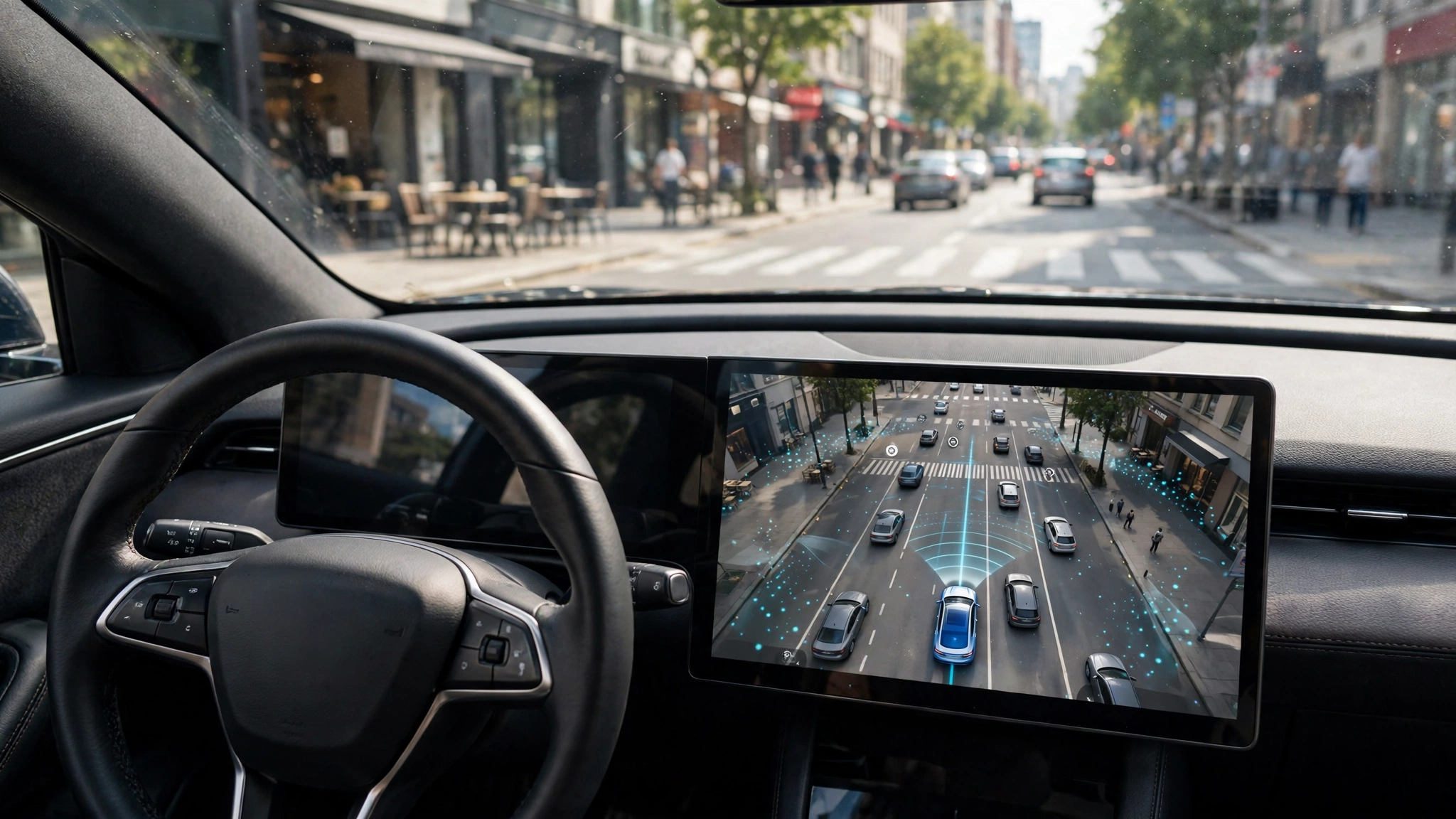
Self-driving cars are the classic example. They constantly track the speed and position of nearby vehicles, recent lane changes, and road conditions, then decide what to do next based on that recent window of data. The large language models behind today’s chatbots work this way too — they consider the conversation so far, within a limited window, to respond sensibly. Systems like today’s free AI agents also fall in this camp, chaining recent steps together to finish multi-part tasks.
Most of that ability comes from training on huge datasets beforehand, then applying what was learned to fresh, short-term information in the moment. It’s a practical middle ground — smarter than pure reaction, far simpler than true understanding.
Theory of Mind
Theory of mind AI is where we step into the future. In psychology, “theory of mind” means understanding that others have their own thoughts, feelings, and intentions. An AI with this ability could read a situation socially — sensing frustration in your voice, noticing a joke landed badly, adjusting to your emotional state instead of just your words.
Researchers are exploring early pieces of this in labs — robots that gauge human attention, systems that model what a user probably wants. But a true theory-of-mind machine doesn’t exist yet. It’s a research direction, not a product you can buy.
Why does it matter? Because so much of human communication runs on unspoken context. Until AI grasps that layer, talking to it will always feel a little flat, however fluent the words sound.
Self-Aware AI
Self-aware AI is the final rung — a machine with consciousness, a sense of its own existence, its own states and needs. It wouldn’t just process the world; it would experience itself within it.
Let’s be direct: this is entirely hypothetical. No such system exists, and scientists don’t agree on how we’d build one, or how we’d test whether a machine is truly conscious rather than acting the part. It raises questions that are as much philosophy as engineering — what would a conscious machine be owed, morally? Nobody knows, and we don’t need the answer yet.
Comparison Table
| Type | What it can do | Real-world example | Exists today? |
|---|---|---|---|
| Narrow AI | Master one specific task | Voice assistants, spam filters | Yes |
| General AI | Learn any task like a human | None yet | No |
| Super AI | Exceed human intelligence overall | Movie and fiction concepts | No |
| Reactive Machines | Respond to the present moment only | Deep Blue chess computer | Yes |
| Limited Memory | Use recent data to decide and improve | Self-driving cars, chatbots | Yes |
| Theory of Mind | Understand emotions and intentions | Early lab research only | No |
| Self-Aware AI | Possess consciousness and selfhood | Purely theoretical | No |
Which Type of AI Do We Actually Use Today?
Short answer: narrow AI, nearly all of it built on limited memory. That’s it. That’s the whole list.
The assistant on your phone, the translation app you used on holiday, the tool that cleaned up your photo — narrow AI every time. When these tools seem to “learn” your taste, that’s limited memory at work, weighing your recent choices to predict the next one. Digging into what is the purpose of ai in everyday products makes this plainer: the goal is always a specific job done better, not a general mind.
It also helps to understand what’s under the hood. The 3 pillars of ai platform architecture — data, models, and infrastructure — show how narrow systems get built, and why jumping to general intelligence is so hard. Knowing the type you’re dealing with sets honest expectations, too: a narrow tool is brilliant inside its lane and useless outside it, and that’s not a flaw. It’s the design.
So when a headline claims a new system “thinks like a human,” ask: which type is it, really? Nine times out of ten it’s a very capable narrow AI — impressive, useful, and still far from the machines in the movies.
Frequently Asked Questions
The four functional types are reactive machines, limited memory, theory of mind, and self-aware AI. Reactive machines respond only to the present moment, limited memory systems use recent data to decide, and the last two — systems that would understand emotions or possess consciousness — don’t exist yet.
By capability, AI divides into narrow AI, general AI, and super AI. Narrow AI handles one specific task and is the only kind that exists today. General AI would match human flexibility across tasks, and super AI would exceed it — both remain theoretical.
ChatGPT is narrow AI built on limited memory. It holds the recent conversation in a limited window to respond in context, but it has no lasting memory of you, no general human-like understanding, and no consciousness. It’s extremely capable within its lane, which is language.
Self-driving cars use limited memory AI. They continuously observe nearby vehicles, speeds, and road changes from the recent past, combine that with training data, and decide their next move. They don’t rely on pure reaction — but they don’t understand the road like a human driver does either.
Nobody knows for certain. Some researchers believe general AI is a matter of scaling and time; others argue a fundamental breakthrough in how machines understand the world is still missing. Everyone agrees it doesn’t exist today, however capable narrow systems have become.
The most advanced AI in real use is narrow AI with limited memory — large language models, recommendation engines, and self-driving systems. Genuinely impressive, but still task-focused. Theory of mind and self-aware AI remain research ideas, not working technology.

Hamad Arshad
SEO Specialist | SEO Manager | GEO Strategist
7+ Years of Experience in SEO, GEO, AEO, AI SEO, Local SEO, Technical SEO, PPC, Google Ads & Meta Ads.