

Does Character AI Use Water 2027
Type “does Character AI use water” into a search bar and you will find people arguing about it as if the app itself were drinking from a tap. It is not, obviously. But the honest answer to the question is still yes – indirectly, measurably, and as part of the same water debate that now follows every large AI service. Every chat you have with a character is processed on real computers, in real buildings, and those buildings use water. Here is what is actually known, what is estimated, and what nobody – including Character AI – has ever published.
In short: Yes, Character AI uses water indirectly. The service does not run its own data centers; it runs on Google Cloud, on Google’s TPU and GPU infrastructure, and Google’s data centers consume billions of gallons of water a year, mostly for cooling – about 8.1 billion gallons across Google in 2024 and 10.9 billion in 2025, according to Google’s own environmental reports. Character AI’s individual slice of that total has never been disclosed, and per-chat figures for the service do not exist. The “2027” attached to this question comes from a widely cited research projection that AI’s global water withdrawal could reach 4.2 to 6.6 billion cubic metres by 2027 – an industry-wide estimate, not a Character AI number.
The short answer – yes, but not the way the memes say it
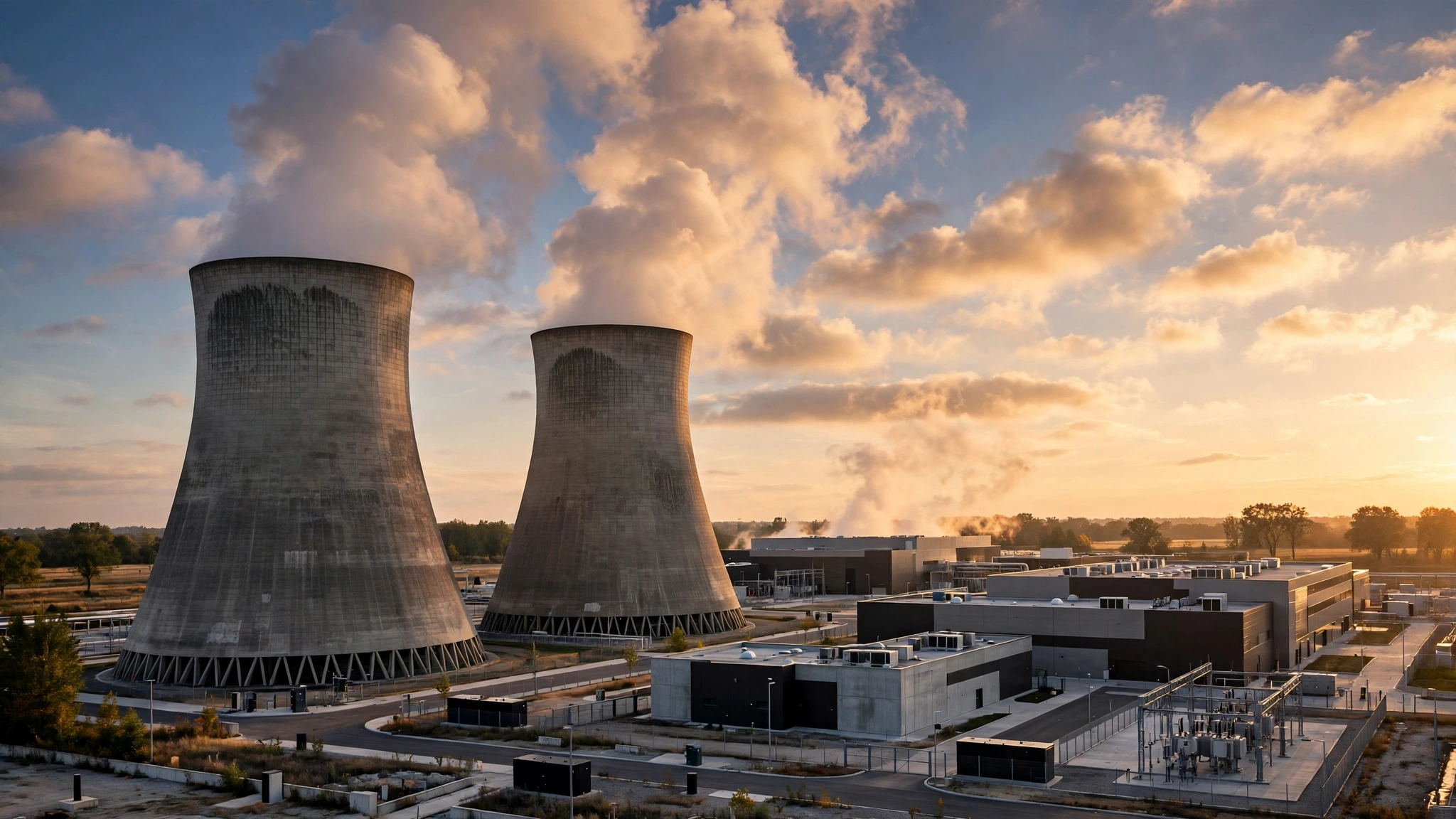
No water flows through your phone when you chat. What happens instead is this: your message travels to a data center, a large language model runs on specialised chips to produce the reply, and those chips generate serious heat. Heat is the enemy of computing hardware, so data centers spend enormous effort removing it – and one of the cheapest, most effective ways to remove heat is evaporating water. That is where the water goes. It is the same basic story behind why are data centers controversial: the buildings are invisible to users, but their resource appetites are very real to the towns hosting them.
So the question is really: whose data centers does Character AI use, and how much water do those use?
Where Character AI actually runs
Character AI does not own data centers. It is built on Google Cloud – Google itself describes Character AI as using its AI Hypercomputer architecture, across both TPU and GPU-based infrastructure, “to train and infer LLMs faster and more efficiently”, and the two companies have publicly partnered on cloud since 2023. The relationship deepened with Google’s 2024 licensing deal with Character AI. By late 2024, after migrating more of its workload onto Google Cloud TPUs, Character AI had reportedly cut its outages by around 85% – the era of the famous “waiting room” queues largely ended because the service moved onto bigger, better infrastructure.
That infrastructure is the point. When you read that Character AI “uses water”, the water in question is Google’s: the cooling systems of the Google data centers that happen to be serving your conversation at that moment. Character AI publishes no water figures of its own, and no regulator requires it to – tenants of a cloud inherit the landlord’s footprint, and the landlord here is one of the most scrutinised data center operators on Earth.
Why data centers drink at all
A rack of AI chips can draw as much power as a small street of houses, and almost all of that electricity ends up as heat. Many large facilities cool themselves with evaporative systems: water absorbs the heat and carries it away as vapour. Some sites use air cooling or closed-loop systems instead, and the mix varies by climate and by how water-stressed the location is – which is why siting decisions keep ending up in local politics.
Two words matter for reading any of the headline numbers. Water withdrawn is water taken from a source, some of which may be returned. Water consumed is water that is evaporated or otherwise not returned – the portion that is genuinely gone from the local supply. Google reports both, and the figures below are consumption, the stricter measure.
How much water are we actually talking about?
Google is one of the few operators that publishes detailed numbers, which makes it the best available window into the footprint of services like Character AI that run on its cloud. From Google’s environmental reports: the company consumed about 6.4 billion gallons of water in 2023, 8.1 billion gallons in 2024, and 10.9 billion gallons in 2025 – a rise of roughly a third in the last year alone, which Google attributes largely to AI growth. Data centers account for about 96% of that consumption; the offices are a rounding error.
Now the important honesty: none of that is “Character AI’s” number. It is the total for everything Google runs – Search, YouTube, Gmail, and thousands of cloud customers, of which Character AI is one. Nobody outside Google and Character AI knows what share of a given facility’s cooling bill belongs to character chats, and anyone quoting you a precise Character AI water figure is inventing it.
At the small end of the scale, Google has published one careful per-request measurement for its own Gemini apps: a median text prompt came out at about 0.26 millilitres of water – roughly five drops – counting cooling and the water embedded in the electricity, using its full methodology. Character AI’s models are different, so treat that as a sense of scale rather than a measurement of your chats. It does, however, put the viral claims in perspective: the famous “one bottle of water per email” figure traces back to estimates for an older generation of models, and the researchers behind the original work have themselves cautioned against the over-confident versions circulating online. Training runs are a different matter – the ai model training cost in water and energy is concentrated in the weeks a model is built, not in each individual reply afterwards.
What the 2027 figure actually means
The year in this search is not random. It comes from a University of California, Riverside research paper, “Making AI Less Thirsty”, which projected that global AI demand could withdraw 4.2 to 6.6 billion cubic metres of water by 2027 – a figure often compared to roughly half the United Kingdom’s annual water withdrawal. The paper covered AI as a whole: every chatbot, image generator and recommendation engine on the planet, not any single app.
So “does Character AI use water 2027” is really two questions wearing one coat. Is Character AI part of an industry whose water footprint is growing toward that projection? Yes – it runs on the same kind of infrastructure, at real scale, serving millions of conversations. Does the 2027 number describe Character AI specifically? No. It describes the whole industry’s trajectory, and Character AI’s undisclosed slice of it.

Is anything being done about it?
Some things, mostly at the infrastructure level. Google says it replenished about 78% of its freshwater consumption in 2025 through watershed restoration projects, and it has a stated goal of replenishing 120% of the freshwater it consumes by 2030. Newer facilities increasingly use air cooling or non-potable water where local supplies are tight, and a handful of planned sites have been redesigned or paused after local water fights – the politics around why are data centers controversial are actively shaping where the next buildings go.
On Character AI’s side, the disclosure cupboard is bare: no water reporting, no per-chat estimates, nothing beyond the efficiency that comes free with running on modern TPU infrastructure. Its widely reported post-2024 shift toward post-training existing open models, rather than training giant models from scratch, would also point to a smaller training footprint than its earlier years – but “would” is doing real work in that sentence, because the company simply does not publish the data. Until AI services are required to report like their landlords do, the most truthful answer available is the one this article started with: yes, water is used, the totals at platform level are large and published, and your individual chat’s share is tiny and unmeasured.
Frequently asked questions
Yes, indirectly. Character AI runs on Google Cloud data centers rather than its own facilities, and those data centers use water – mainly for cooling the chips that generate your chats. Character AI itself publishes no water figures, so its exact share of Google’s total is not known.
Nobody publishes a per-chat figure for Character AI. For scale, Google measured a median Gemini text prompt at roughly 0.26 millilitres of water – about five drops – counting cooling and electricity-related water. Character AI’s models and setup differ, so that number is a guide to scale, not a measurement of your conversation.
Because of a University of California, Riverside projection that AI worldwide could withdraw 4.2 to 6.6 billion cubic metres of water by 2027. It is an estimate for the entire AI industry, not for Character AI specifically, but the figure went viral and attached itself to almost every popular AI app.
No. Character AI is built on Google Cloud, using Google’s TPU and GPU infrastructure to train and run its models – Google describes the arrangement in its own cloud publications. That means its water footprint sits inside Google’s reported data center totals.
Partly. Water “consumed” by evaporative cooling leaves the local source as vapour, while “withdrawn” water may be partly returned. This is why consumption figures matter more than withdrawal figures, and why the same facility can look very different depending on which number is quoted.
There is no reliable league table. Companies report water at company or data center level, not per app or per chat, and the answer depends on the model, the facility’s cooling type and the local climate. Services running on efficient, newer infrastructure in water-rich regions will generally sit at the lower end, but precise rankings would be guesswork.

Hamad Arshad writes and edits AI Next Top from Rahim Yar Khan, Pakistan. He has worked in SEO and digital marketing for over 7 years and started this site to explain AI tools and news in plain language for non-technical readers. Every guide here is checked against the real tool before it is published.








Leave a Reply