Retail AI Vision Automation – How Stores Use AI Cameras
TL;DR: Retail AI vision automation turns ordinary in-store cameras into intelligent sensors using computer vision. It tracks shelf stock, counts footfall, detects checkout queues, and maps where shoppers look – in real time. Retailers report out-of-stock detection up to 14x faster, 25% lower operational costs, and sales lifts around 20%.
What Is Retail AI Vision Automation?
Retail AI vision automation is the use of computer vision and AI to analyze video from cameras already installed in stores. Instead of footage that nobody watches, the system converts each camera stream into structured events: a shelf gap detected, a queue forming, a shopper entering, a product picked up. Processing often happens on edge devices in the store itself, so insights arrive in seconds without streaming everything to the cloud.
How Do AI Cameras Work in Stores?
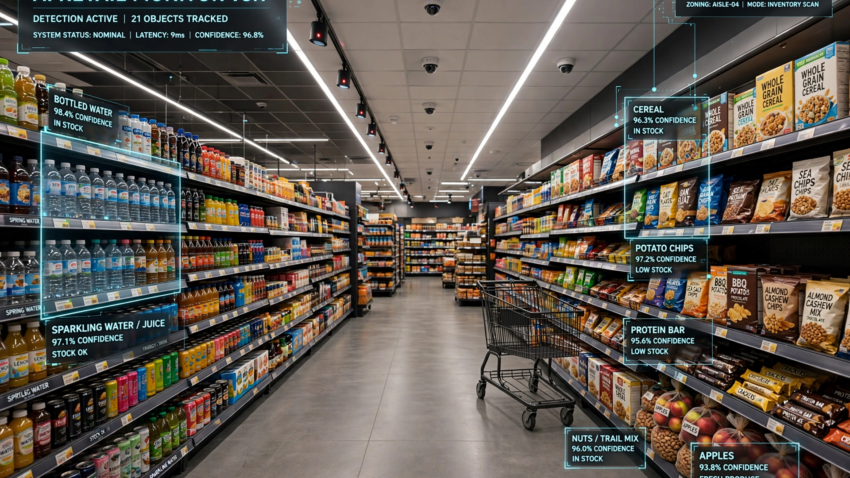
A typical deployment assigns cameras to zones: entrance cameras count people crossing a virtual line to measure footfall; shelf cameras watch product regions and estimate on-shelf availability with object detection models like YOLOv8; checkout cameras monitor queue length and trigger staff alerts. The video is processed locally on edge hardware, detections become events, and a dashboard shows store managers footfall trends, stock alerts, and queue status. Modern platforms go further, building a 3D digital twin of the store so the AI understands where shoppers, shelves, and products sit in the same space.
Forward-thinking teams pair these dashboards with AI agents that automate daily work, turning shelf and queue alerts into actions automatically.
Key Applications of Retail Vision AI
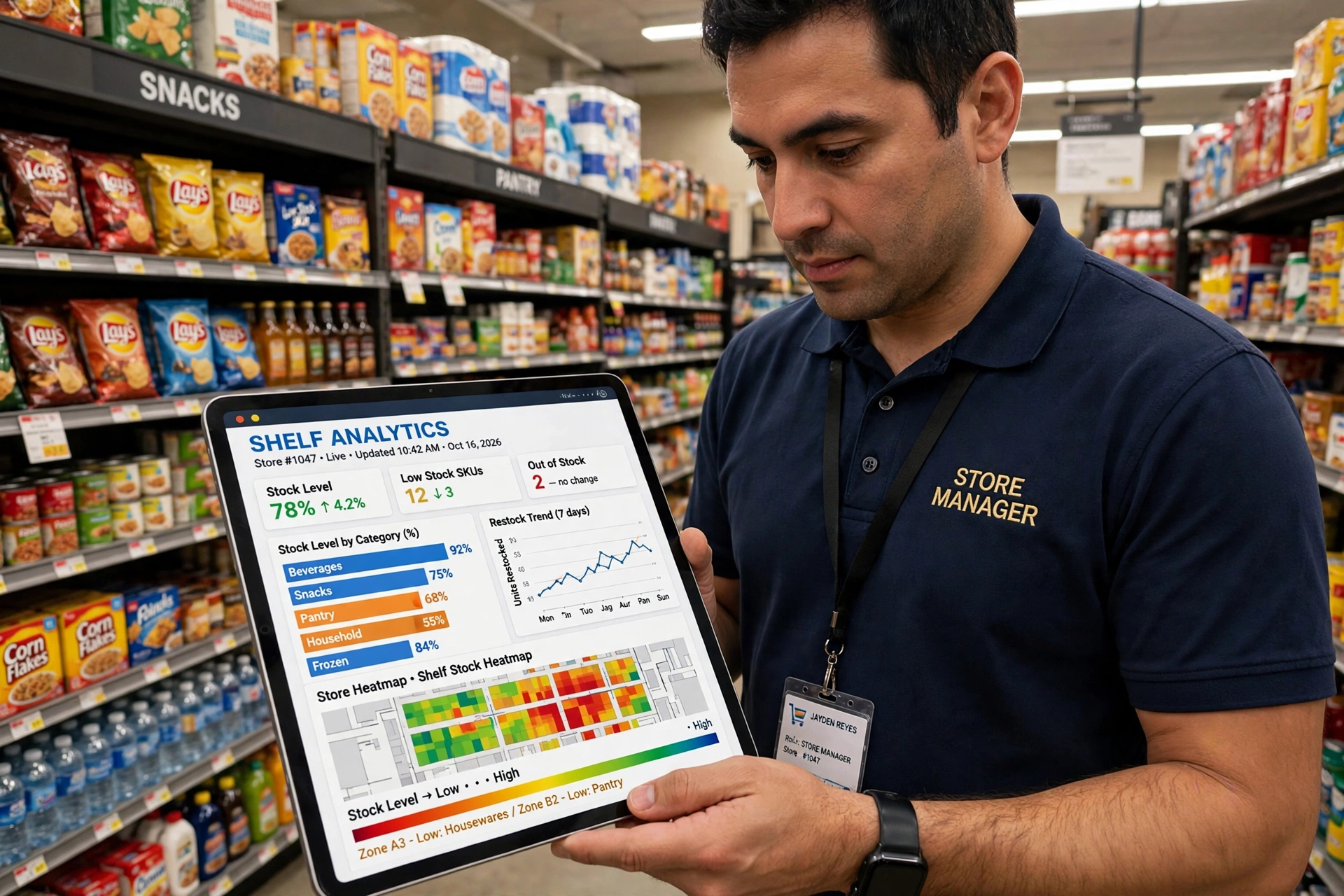
- Shelf monitoring – cameras detect empty gaps and misplaced items continuously, replacing daily manual gap-scans. Field deployments have found out-of-stock events up to 14x faster than staff audits.
- Footfall and traffic analytics – entry/exit counting, dwell time by zone, and conversion estimates help optimize staffing and layout.
- Queue detection – checkout cameras spot growing lines and alert managers to open another till before customers abandon carts.
- Shopper attention mapping – spatial AI estimates where shoppers look, producing heatmaps that show which shelves attract eyes and which are ignored, informing merchandising.
- Demand forecasting – combining vision data with sales history helps predict restocking needs, cutting waste on short-shelf-life products.
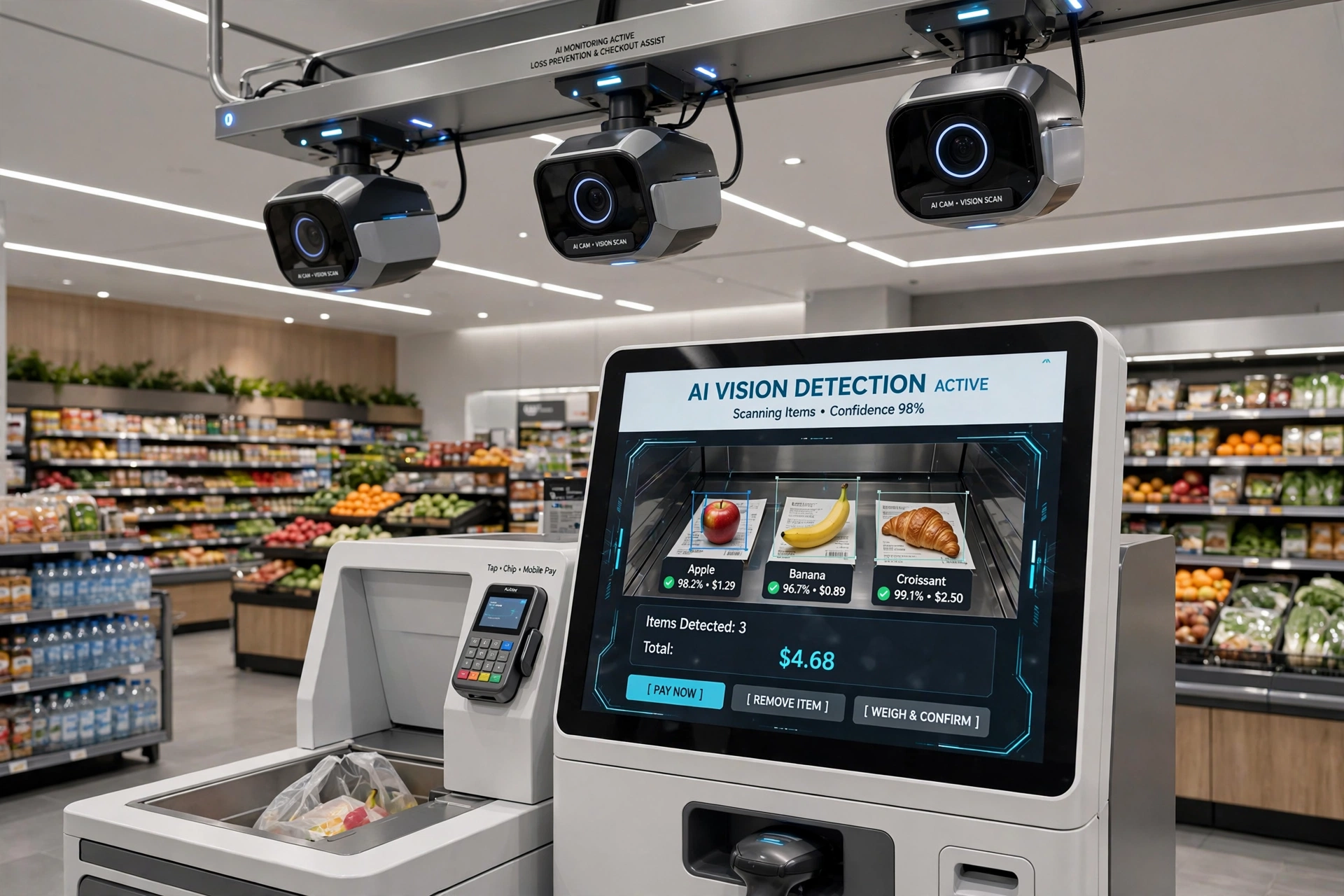
- Loss prevention – the same cameras that track shelves also flag suspicious behavior at self-checkout.
Real Examples
- Morrisons and Focal Systems – across each supermarket, 400 to 600 AI-powered cameras capture every shelf continuously, replacing manual gap-scanning walks. Store leadership called it a game-changer for teams.
- Sam’s Groceria and UST – a vision-AI deployment with smart cameras per store delivered a 25% reduction in operational costs, a 20% sales increase, and 15% better staff productivity through real-time shelf and shopper insights.
- Korean convenience chains (GS25) – visual AI paired with standard 2D cameras monitors planogram compliance and empty shelves without hardware upgrades, cutting empty-shelf gaps by 20–30%.
- Auki Cactus – spatial AI that turns existing cameras into attention sensors, mapping shopper gaze onto shelves and products to connect visual interest with sales data.
Benefits vs Challenges
| Benefits | Challenges | |
|---|---|---|
| Operations | 14x faster stockout detection | Camera installation and calibration |
| Costs | ~25% lower operational costs reported | Upfront hardware and software spend |
| Sales | ~20% lift from availability + layout | ROI depends on store size |
| Staff | Fewer manual audits, faster response | Change management and training |
| Privacy | Edge processing keeps video local | Must comply with privacy regulations |
How Much Does Retail Vision AI Cost?
Costs vary widely: a pilot with a handful of cameras and a SaaS dashboard can start in the low thousands per store per year, while chain-wide deployments with hundreds of cameras run into six figures annually. The economics work best where labor is expensive and stockouts are costly – large supermarkets, convenience chains, and high-traffic specialty stores. Always pilot in 2–3 stores, measure stockout reduction and labor hours saved, and scale only on proven numbers. Smaller formats can start lean – see the best AI tools for small businesses in 2026 for affordable options.
Frequently Asked Questions
It is the use of computer vision on in-store camera feeds to automate shelf monitoring, footfall counting, queue detection, and shopper behavior analytics in real time.
Shelf cameras watch defined product regions; object detection models estimate visible product availability and raise an alert when gaps persist, far faster than manual checks.
Pilots can start affordably per store, but chain-wide rollouts are a serious investment. Most retailers pilot first and scale on measured ROI.
Reputable systems process video on edge devices in-store, store only structured events (counts, alerts) rather than footage, and must comply with local privacy laws. Check vendor data policies before buying.
Yes – single-camera queue detection or one-aisle shelf monitoring pilots are affordable entry points, though ROI is strongest at larger formats.
RFID tracks individual tagged items; vision AI observes shelves, people, and behavior without tagging every product. Many retailers use both.
Conclusion
Retail AI vision automation turns the cameras stores already own into a real-time operations team: shelves stay stocked, queues stay short, and merchandising decisions get hard data. The reported numbers – 14x faster stockout detection, 25% cost cuts, 20% sales lifts – explain why adoption is accelerating (see AI’s timetable for what’s next). Start with a small pilot, measure ruthlessly, and let the results decide the rollout. Beyond retail, explore AI automation tools with no restrictions to automate other parts of your business.

Hamad Arshad
SEO Specialist | SEO Manager | GEO Strategist
7+ Years of Experience in SEO, GEO, AEO, AI SEO, Local SEO, Technical SEO, PPC, Google Ads & Meta Ads.