

3 Pillars of AI Platform Architecture
Every reliable AI platform, no matter who built it, stands on the same three pillars. Strip away the marketing pages and funding announcements, and you’ll find the same skeleton underneath — data, models, and compute. When a system feels smart and effortless, all three were built with care. When it hallucinates or quietly falls apart in production, one of the three was neglected.
That’s good news if you’re building or buying anything AI-related. You can judge any platform by asking three plain questions about its data, its models, and the machines they run on. The different types of ai differ on the surface, but the architecture underneath them barely changes.
In short: the 3 pillars of ai platform architecture are data (what the system learns from), models (how it learns and decides), and compute (the infrastructure that runs it all) — and the weakest pillar decides how reliable the platform feels.
What Are the 3 Pillars of AI Platform Architecture
Think of a platform like a three-legged stool — the seat stays level only while all three legs are equal in strength. Pour money into bigger models while the data feeding them stays messy, and the stool still tips.
| Pillar | What it covers | Why it matters |
|---|---|---|
| Data | Collection, storage, pipelines, labeling, quality, governance | Models only know what the data taught them |
| Models and algorithms | Training, fine-tuning, evaluation, versioning | This is where raw data becomes actual decisions |
| Compute and infrastructure | GPUs and TPUs, cloud or on-prem, serving, scaling, monitoring | Nothing runs, scales, or stays affordable without it |
Pillar 1 – Data
Data is the foundation, and the least glamorous pillar to build. It covers where information comes from, how it moves, and whether anyone trusts it.
Collection is where it starts. Support tickets, transactions, documents, sensor readings, user behavior — whatever the system learns from must be captured completely and consistently. Then comes storage, usually databases for live records and larger lakes or warehouses for historical data. Pipelines sit between the two, cleaning and reshaping raw inputs into something a model can use. That unglamorous plumbing — deduplicating records, fixing formats, filling gaps — decides more about results than most algorithm choices will.
Labeling adds the human judgment layer — examples marked correct, incorrect, spam, urgent, safe. Good labels teach a model what “right” looks like. Sloppy labels teach sloppy lessons, permanently.
Then there’s quality and governance. Quality means asking whether the data is accurate, current, and representative of the world the system will face. Governance means knowing who can access what, how long records are kept, and whether you even have the right to use the data you’re training on.
The old saying still runs the show — garbage in, garbage out. A brilliant model trained on biased, stale, or mislabeled data doesn’t become average. It becomes confidently wrong, at scale.

Pillar 2 – Models and Algorithms
If data is what the system learns from, models are how it learns. This pillar covers the full life of a model, not just the training run at the start.
Training is the heavy lift — feeding prepared data into an algorithm until patterns emerge. Teams sometimes train from scratch, but far more often they fine-tune an existing model toward one specific job with a smaller, focused dataset. Fine-tuning is cheaper, faster, and usually smarter, which is why most real platforms are built on adapted models rather than homegrown ones.
Evaluation is where honesty enters. Before a model touches real users, it gets tested against held-back data it has never seen, and its mistakes get examined, not just averaged into a single score. A model that’s 95 percent accurate overall but fails completely on one customer segment isn’t ready — it’s a liability wearing a good grade.
Versioning and basic MLOps keep this pillar sane over time. Every change gets recorded, so when results dip, the team can roll back instead of guessing. Retraining matters too, because the world drifts, and a frozen model slowly becomes a model of a world that no longer exists. Newer setups raise the stakes — teams experimenting with free ai agents stack small decision makers on this same pillar, making evaluation and versioning more important, not less.
Pillar 3 – Compute and Infrastructure
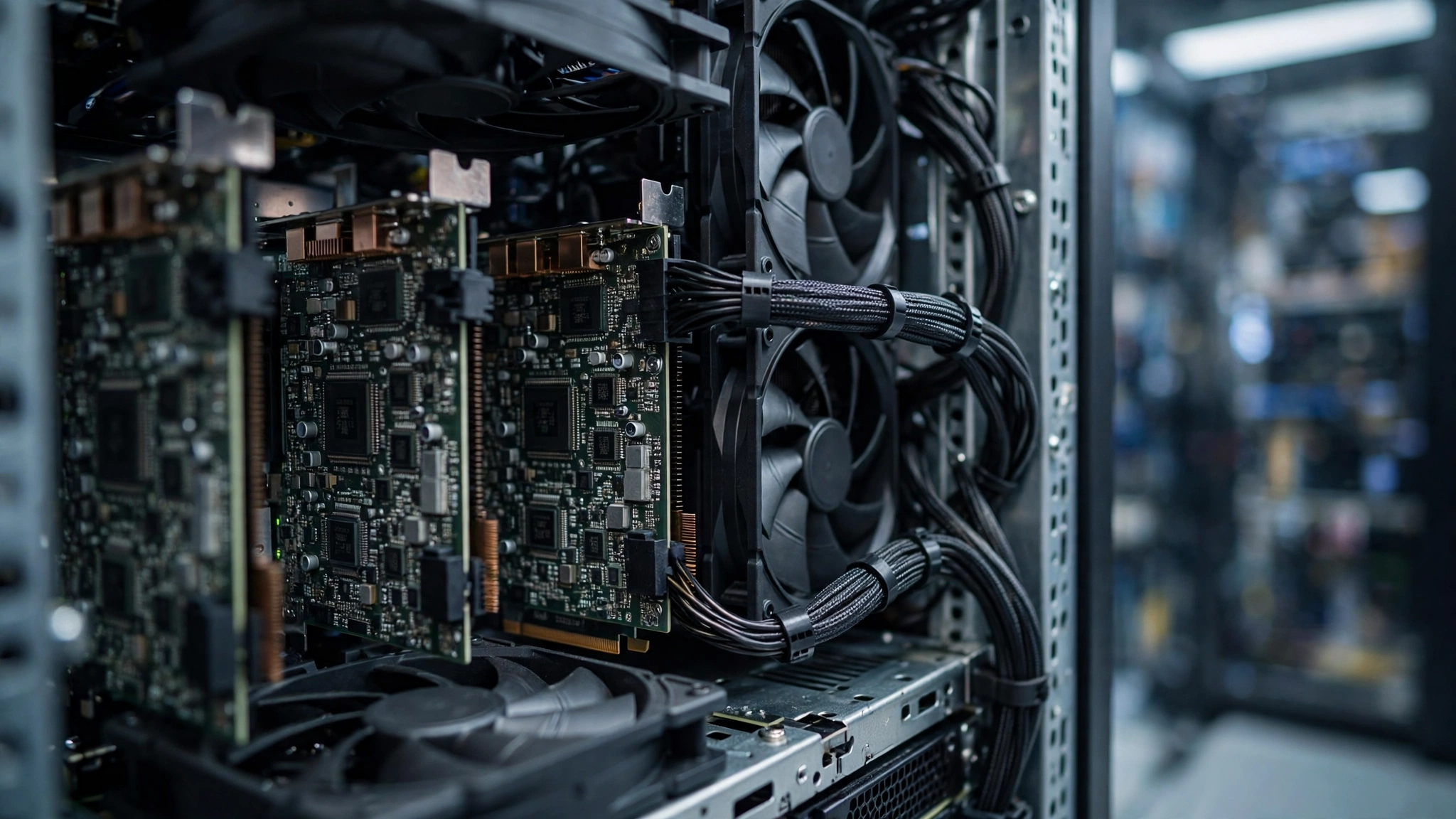
Compute is the physical reality underneath everything. Models train on GPUs or TPUs — chips built for the massive parallel math AI requires — and answer users from servers that must respond in milliseconds.
The first big decision is cloud versus on-premises. Cloud rents you flexibility — scale up for a launch week, scale down after, pay for what you use. On-premises hardware costs more upfront but gives control, predictable performance, and data that never leaves your building, which matters in regulated industries.
Serving is the other half of this pillar, and it gets underestimated constantly. A model that answers in the lab still has to survive real traffic and real outages. Load balancing, caching, and sensible fallbacks separate a clever model from a dependable product, while monitoring watches response times and error rates so problems surface before customers report them.
And then there’s cost control. An unmonitored system can burn a serious budget on idle capacity or oversized models doing tiny jobs. The teams that last match model size to task size — a lesson anyone sketching an edtech ai startup website design learns fast when the first cloud bill arrives.
How the Three Pillars Work Together
Here’s one concrete system — a support chatbot answering customer questions for a mid-sized company.
It starts in the data pillar. Years of support tickets get collected, cleaned, and labeled by outcome — resolved, escalated, refunded, ignored. Duplicates are merged, personal details handled under clear governance rules, and the final dataset reflects how agents actually solved problems.
Next, the models pillar. A language model is fine-tuned on that ticket history and tested against tricky cases — angry customers, ambiguous requests, refund edge cases. It passes evaluation only when its answers match what a good human agent would say, and each version is saved, so a bad update can be rolled back in minutes.
Finally, compute makes it real. The model runs on infrastructure that scales during Monday-morning ticket surges and idles cheaply on Sunday nights. When customers start asking about a new product, fresh tickets flow into the data pillar and the cycle repeats. It’s the same loop behind bigger journeys, like the agentic commerce journey discovery to transaction, where every step depends on the last one working.
What Breaks When One Pillar Is Weak
Imbalances don’t announce themselves politely — they show up as symptoms people blame on the wrong thing.
Weak data looks like a model that’s mysteriously biased, confidently outdated, or brilliant on common questions and hopeless on real ones. The tell is inconsistency — the same question gets different-quality answers depending on phrasing, because the training data never covered the variations.
Weak models look different. The data is fine; the answers are just mediocre — shallow reasoning, poor judgment on edge cases, no improvement over months because nobody owns evaluation or retraining. Teams often respond by buying more compute, which only makes the mediocrity faster.
Weak infrastructure has the loudest symptoms. Timeouts. Slow answers at peak hours. Bills that make finance ask hard questions. A great model behind strained serving feels dumb to users, because nobody waits twelve seconds for a smart answer.
Each weakness disguises itself as another pillar’s fault, so diagnose honestly — data, model, or machines — before fixing the wrong leg.
A Simple Checklist for a Balanced AI Platform
You don’t need an engineering degree to audit a platform. Ask these questions and listen for specific answers.
- Where does the training data come from, and who checks its quality?
- How are records cleaned, labeled, and kept current?
- What governance rules cover access, retention, and consent?
- Is the model trained from scratch or fine-tuned, and why?
- How is it evaluated before release, and on what edge cases?
- Can the team roll back to a previous version quickly?
- What hardware runs it, and what happens when traffic triples?
- Who watches cost per request, and can they explain it?
- What gets monitored in production, and who sees the alerts?
Nine questions, three per pillar. Answer all nine clearly and the architecture is probably sound; vague answers around one pillar show exactly where the stool will wobble.
Frequently Asked Questions
Data, models, and compute. Data is what the system learns from, models are how it learns and decides, and compute is the hardware and infrastructure that runs everything.
Whichever one is weakest. A platform fails at its thinnest point, so a strong model can’t rescue bad data, and great data can’t rescue infrastructure that collapses under traffic. Balanced investment beats a star pillar with two neglected ones.
Because models learn patterns from data and nothing else. If the data is biased, stale, or mislabeled, the model absorbs those flaws and repeats them confidently. Clean, representative data sets the ceiling for everything built on top of it.
Compute is the power behind training and serving. GPUs and TPUs handle the heavy math of training, while servers, scaling, and monitoring keep the system fast and available. It also decides a large share of the running cost.
Yes, mostly by renting instead of building. Cloud infrastructure covers the compute pillar, pre-trained models cover most of the models pillar, and the team’s real job becomes the data pillar — collecting clean, relevant data about their own customers.
Continuously for monitoring, and formally every few months. Data drifts as customers and markets change, models age as the world moves, and infrastructure needs shift with traffic. A short quarterly review catches most imbalances before users feel them.

Hamad Arshad
SEO Specialist | SEO Manager | GEO Strategist
7+ Years of Experience in SEO, GEO, AEO, AI SEO, Local SEO, Technical SEO, PPC, Google Ads & Meta Ads.







Leave a Reply