
AI in Medical Field
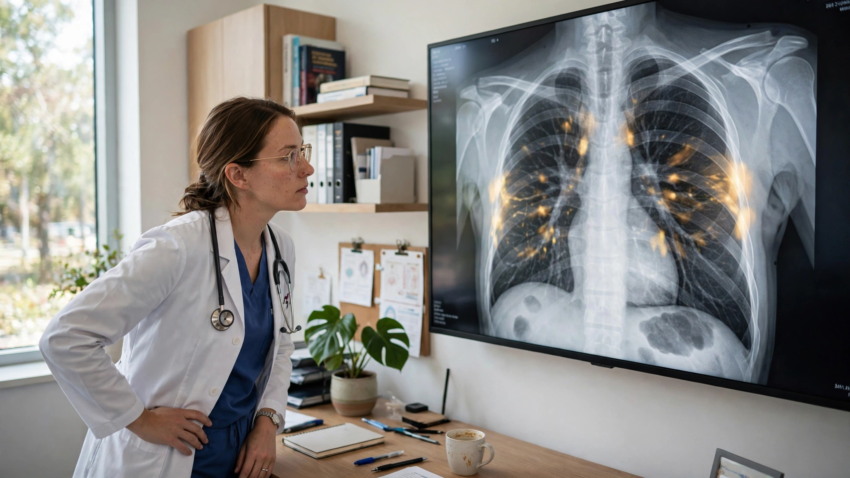
Walk into a modern hospital and you may not notice it, but AI is already there. It helps read scans, flags test results that need a second look, and quietly handles the paperwork that used to eat a doctor’s evening. The AI in medical field story is not about robot doctors replacing anyone. It is about software taking over the slow, repetitive parts of medicine so the humans can spend their time on judgement and care.
Most of these systems are built on pattern recognition — the same basic idea explained in our guide to what is a neural network. Show a network enough examples of healthy and unhealthy scans, and it learns to spot the difference, sometimes picking up details a tired human eye might miss at the end of a long shift.
In short: AI in the medical field mainly does four jobs — reading medical images, helping spot disease earlier, speeding up drug research, and cutting admin work like notes and scheduling. It works best as an assistant to doctors, not a replacement. Its weak points are biased training data, overconfidence, and the fact that a model can be right for the wrong reasons, which is why a human still signs off on real decisions. For career guidance, see Sam Altman Advice for Young Workers in the AI Age.
Reading scans and medical images
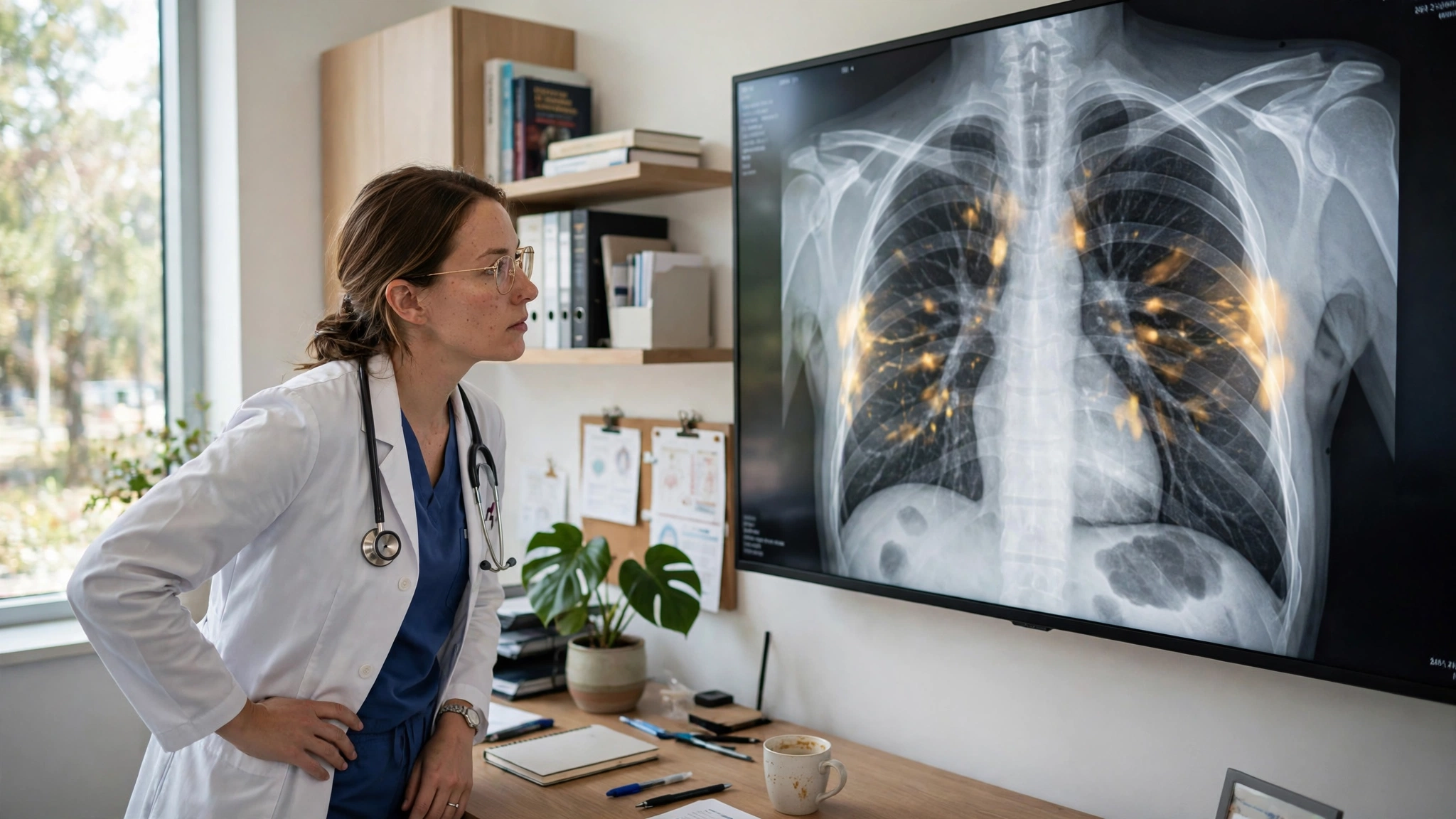
This is where medical AI earned its reputation first. Radiology departments produce enormous numbers of X-rays, CT scans and mammograms, and every one of them needs careful reading. AI tools now act as a tireless second pair of eyes, highlighting areas that look suspicious so the radiologist can check them first.
The practical benefit is ordering. Instead of working through a pile of scans in the order they arrived, doctors can start with the ones the software flagged as urgent. A possible stroke or a collapsed lung gets seen in minutes rather than hours. In busy hospitals, that reordering alone saves lives, even if the AI never makes a single diagnosis itself.
Skin checks work in a similar way. A photo of a mole can be compared against huge libraries of images, giving a quick risk signal before a specialist appointment. It is not a verdict, just a nudge about how fast you should be seen.
Spotting disease earlier
Many illnesses are far easier to treat when caught early, and early signs are often faint. AI is good at faint. Models trained on eye scans can flag early diabetic damage before symptoms appear. Systems watching heart data can notice rhythm patterns linked to future problems. Blood test combinations that look unremarkable one by one can, together, suggest something worth investigating.
This is one of the clearest examples of how the different types of ai work together in real life — prediction models estimating risk, image models reading scans, and language models summarising records, all feeding the same doctor a clearer picture of the same patient. For a different multi-agent example, see How AI Agent Swarms Behave in Minecraft.
Earlier detection also changes the economics of care. Treating an early problem is usually cheaper and kinder than treating a late one, which is why health systems keep investing in screening tools even when each individual improvement looks small. Data infrastructure debates are also covered in Why Are Data Centers Controversial.
Helping discover new medicines
Developing a new drug traditionally takes many years and a staggering amount of money, and most candidate molecules fail. AI helps at the searching stage. Models can predict which molecules are worth testing, simulate how they might behave, and scan existing medicines for new uses nobody had considered.
None of this removes the slow, careful work of trials in real people. Safety cannot be shortcut. But AI shrinks the haystack. Instead of testing thousands of unlikely candidates, researchers can start with a shorter, smarter list, which means promising treatments reach the trial stage sooner.
Cutting the paperwork mountain
Ask doctors what frustrates them most and many will not say disease. They will say documentation. Notes, forms, insurance codes, referrals — the admin tail of medicine is enormous, and it steals hours from patient time.
Language-based AI now drafts clinical notes from recorded conversations, summarises long patient histories into a page, and handles routine scheduling and reminders. If you have ever wondered what is the purpose of ai in everyday work, this is a good answer: it removes the typing so the professional can do the part only a professional can do.
Hospitals report that even small time savings per appointment add up across thousands of appointments a week. Some of that time goes back to patients. Some goes to letting staff finish on time, which matters in a field struggling with burnout.

What AI still cannot do in medicine
For all the progress, the limits are real and worth stating plainly.
It learns from the past. A model trained mostly on data from one population can perform worse on another. If the training data underrepresents certain ages, skin tones or conditions, the mistakes land unevenly. Good hospitals test tools on their own patients before trusting them.
It can be confidently wrong. AI does not say “I’m not sure” the way a careful doctor does. It produces an answer with the same smooth confidence whether it is right or guessing. That is why the standard setup is AI suggests, human decides.
It does not understand the person. A scan is not a patient. Context matters — the person’s life, fears, other conditions, and what they would actually choose. That judgement is still human work, and patients consistently say they want it that way.
Privacy is delicate. Medical data is the most personal data there is. Every AI system in a hospital has to protect it rigorously, and patients deserve clear answers about what is recorded and who can see it. The teams building these systems, often working in the language described in our python for ai guide, treat that security work as part of the job, not an extra. For a contrasting security incident, see Military Commissary Freezer Cyberattack.
What this means if you are a patient
You will probably meet medical AI without ever being told its name. It may prioritise your scan, draft the letter your doctor sends you, or flag your test result for a faster review. A few habits help you get the best from it.
Ask what a result is based on, and ask for a second human opinion when something big is decided. Keep your own records where you can. And remember that an AI flag is a prompt for a closer look, not a diagnosis — the same way a smoke alarm is a prompt to check the kitchen, not proof of a fire.
Where medical AI is heading
The direction is toward quieter, more personal help. Tools that watch long-term patterns rather than single snapshots. Assistants that prepare a summary before your appointment so the conversation starts further ahead. Screening that reaches places with too few specialists, where a good algorithm plus a nurse can cover ground that today goes uncovered.
The hospitals getting this right share one habit: they treat AI as a junior colleague with superhuman stamina and no common sense — useful every day, supervised always. That balance, enthusiasm with a hand on the wheel, is likely to remain the shape of AI in the medical field for a long time.

Frequently asked questions
No. AI in the medical field handles narrow, repetitive tasks like pre-reading scans, drafting notes and flagging results. Diagnosis, treatment decisions and patient care still belong to doctors, who also carry legal responsibility for them. Think assistant, not replacement.
On specific, well-defined tasks — like spotting certain patterns in mammograms or eye scans — leading systems perform close to specialist level in controlled studies. Real hospitals still pair them with human readers, because accuracy drops when images or patients differ from the training data.
Some tools can suggest likely conditions from symptoms or images, and symptom checkers do this publicly. But a suggestion is not a diagnosis. Proper diagnosis involves examination, history and judgement, and medical AI products are regulated to support doctors rather than decide alone.
Hospitals are required to protect patient data under strict rules, and reputable AI tools are built to work within them. That said, patients are entitled to ask how their data is used. A trustworthy provider can explain this in plain language.
The main ones are biased training data, overconfident wrong answers, and staff trusting the software too much. There is also the risk of unequal access, where well-funded hospitals get powerful tools and smaller clinics get left behind.
It can reduce some costs — earlier detection is usually cheaper than late treatment, and automation cuts admin spending. But new technology also brings its own bills, so the honest answer is that it makes care more efficient first, and cheaper only if those savings are passed on.

Hamad Arshad writes and edits AI Next Top from Rahim Yar Khan, Pakistan. He has worked in SEO and digital marketing for over 7 years and started this site to explain AI tools and news in plain language for non-technical readers. Every guide here is checked against the real tool before it is published.








Leave a Reply