

Python for AI
Ask a room full of AI builders which language they work in, and most hands go up for the same one. Python for AI is such a default choice that the two ideas almost feel glued together. Yet Python was never designed for artificial intelligence. It began as a friendly general purpose language for small scripts and websites. So how did it end up running chatbots, photo apps and recommendation systems?
Part of the answer is timing, and part is simply how pleasant the language is to use. It helps to first glance at the different types of ai out there, because Python shows up in almost every one of them, from simple prediction tools to the big neural networks behind chatbots.
In short: Python became the language of AI because it is easy to read, quick to experiment with, and backed by free libraries that handle the heavy maths for you. Beginners use it to build chatbots, image recognition, predictions and small automations, starting with basic Python, then Pandas for data, then scikit-learn for simple models.

Why Python Became the Language of AI
Python did not win because it is the fastest language. It is not. It won because AI work is mostly experimenting. You try an idea, look at the result, adjust, and try again, and a language that keeps that loop quick beats a faster one that slows you down. Three things pushed Python ahead.
It reads almost like plain English
Python code is famously readable. There are few symbols to memorise, and the structure comes from simple spacing rather than a thicket of brackets. A beginner can often guess what a short script does just by reading it top to bottom. That matters, because when you are learning AI your head is already full of new ideas like data, models and training. A language that stays out of the way leaves more room for the ideas themselves.
Readable code also makes help easier to get, because others can spot your mistake at a glance.
A huge community has already solved your problem
Almost every error a beginner meets has been met before, usually thousands of times, and someone has answered it and written a tutorial around it. Universities teach Python, bootcamps teach Python, and companies hire for Python, so the pile of free explanations keeps growing.
For AI, the effect snowballed. Researchers shared their work in Python, students learned from it in Python, and those students then wrote the next round of tools in Python too.
The hard maths is already packaged for you
Nobody sane writes image recognition from scratch, multiplying thousands of numbers by hand. In Python you rarely have to. Free add-on packages called libraries already contain the heavy machinery, tested and optimised by experts. You describe what you want in a few lines, and the library does the grinding underneath. The maths side has its own surprises, including AI Disproves Exponential Time Hypothesis.
What People Actually Build with Python for AI
In reality, most AI projects fall into a handful of familiar shapes, and Python sits behind all of them.
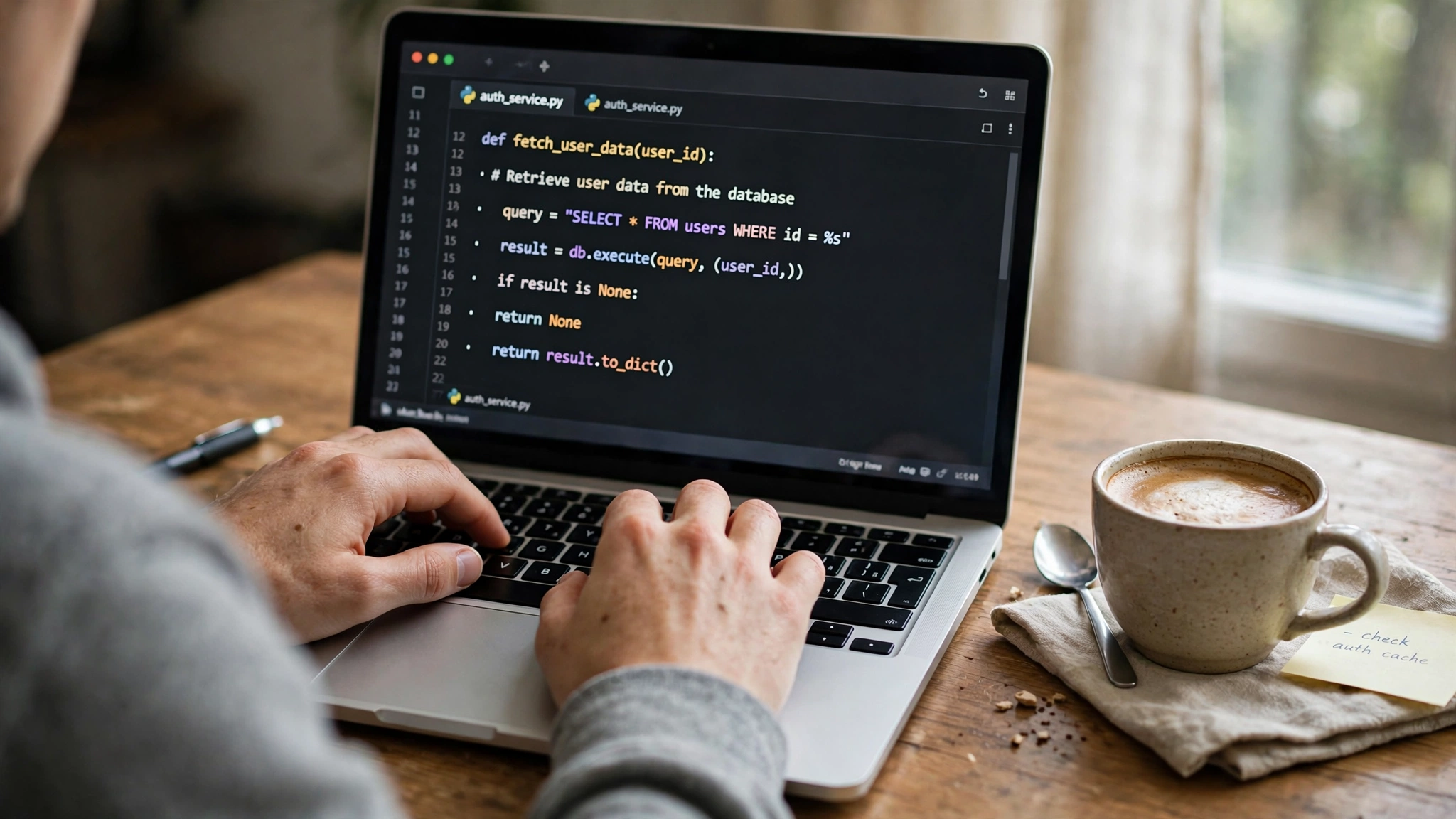
Chatbots and text tools. The chat assistants everyone plays with are trained and served with a lot of Python in the background. If you are curious about the models underneath, our explainer on how do llms work breaks it down in plain words. On a smaller scale, people build simple chatbots that answer set questions for a shop, a class or a support desk. For a related example, read How AI Agent Swarms Behave in Minecraft.
Image recognition. Python tools can sort photos, spot objects in pictures, read text from scanned pages, and flag blurry or duplicate images. Shops use this to organise product photos, and hobbyists use it to sort years of family pictures in an afternoon.
Predictions from past data. Feed Python a table of past numbers and it can learn the pattern. Shops predict which items will sell next month, schools spot students who might be falling behind, and small teams forecast demand instead of guessing.
Everyday automation. Python quietly renames thousands of files, cleans messy spreadsheets, watches a web page for changes, and turns a pile of receipts into a tidy table. This is where many beginners get their first real win, because the result is useful on day one.
The Main Python Libraries in Beginner Words
Libraries are where Python for AI stops being a language and starts being a toolkit. You do not need all of them at once, and most beginners meet them in roughly this order.
NumPy
NumPy handles numbers in bulk. Instead of adding one number at a time, you hand it a whole grid of numbers and it works on all of them together, very fast. AI runs on grids of numbers, so almost everything else is built on top of NumPy.
Pandas
Pandas is for tables. It loads a spreadsheet or data file and lets you clean it, filter it, sort it and peek at summaries in a few readable lines. If AI is cooking, Pandas is where you wash and chop the ingredients. Most real projects spend more time here than anywhere else.
scikit-learn
scikit-learn is the friendly front door to machine learning. It contains ready-made models for predictions, grouping and sorting, all used in the same simple pattern. You pick a model, show it examples, and ask it to predict new ones. Here is how small that can look.
from sklearn.linear_model import LinearRegression
model = LinearRegression()
model.fit([[1], [2], [3]], [2, 4, 6])
print(model.predict([[4]]))
Those four lines teach a model the pattern in three examples, then ask what comes next for the number 4. It answers 8. That is a real, working machine learning script, and the moment many beginners realise how reachable this all is.
TensorFlow
TensorFlow is Google’s heavy-duty toolkit for deep learning, the branch of AI that uses large neural networks. If terms like that are new, our guide on what is a neural network explains the idea without the maths headache. Teams reach for it when models get big, like image and speech systems in real products. Large models also raise questions about the infrastructure behind them, as discussed in Why Are Data Centers Controversial.
PyTorch
PyTorch does the same deep learning job and comes from Meta’s research world. Many researchers prefer it because it feels flexible and close to normal Python while you experiment. Beginners can pick either one later. The ideas transfer, and there is no wrong first choice.
How a Beginner Can Start with Python for AI
The honest path is slower than the adverts suggest, and that is fine. Start with plain Python first, not AI. Spend your early weeks on variables, lists, loops and functions until writing them feels boring. Boring is good. It means the basics have sunk in.
Next, play with Pandas on a small table of your own, maybe your spending or a list of films you rated. Then try one scikit-learn model that predicts something simple. Only after that does deep learning deserve your attention, because TensorFlow and PyTorch make far more sense once the simple pattern feels familiar.
Expect the first month to feel slow and the third to surprise you. Most people quit in the slow part, right before it clicks. Learning alongside others helps more than any single resource, which is one reason ai in education has grown so fast. A realistic goal is a small working project in the first couple of months, not a job-ready portfolio in a fortnight.

Python vs Other Languages for AI
Python is the default, not the only option. Here is the honest picture.
| Language | Good at | Keep in mind |
|---|---|---|
| Python | Learning, experimenting, almost every AI library | Slower at raw speed, though libraries hide most of it |
| JavaScript | AI that runs in a web browser or app | Smaller AI library scene, better for showing models than training them |
| R | Statistics and research charts | Narrower world, mostly data analysis rather than products |
| Java | Big company systems that already run on it | More setup and more code for the same result |
| C++ | Speed critical parts of large AI systems | Much harder for beginners, slower to experiment in |
Notice the pattern. The other languages mostly appear where Python hands over to them, when a speed hungry part gets rebuilt by specialists. For learning and most building, Python stays the front door.
Common Beginner Mistakes
The first mistake is jumping straight to deep learning because it sounds exciting, then drowning. The simple tools exist for a reason, and they solve most beginner sized problems happily enough.
The second is copying code without reading it. Pasted code that runs teaches almost nothing, and the first error message leaves you stranded. Type things out, break them on purpose, fix them. That loop is the actual learning.
The third is ignoring the data. Beginners obsess over picking the perfect model, then feed it a messy table full of gaps and typos. Real projects are mostly cleaning and checking data. The model is often the easy part, so give the data the attention it deserves.
The last one is comparing yourself to people years ahead. Everyone’s first script was wobbly. Progress here is measured in small working things, one after another. Security failures can also appear in unexpected places, as shown by Military Commissary Freezer Cyberattack. Hype cycles are a useful warning, as explained in What Is AI Bubble.
Frequently asked questions
No, it is one of the gentlest first languages because it reads close to plain English and skips the symbol clutter found elsewhere. The ideas behind programming still take practice, but Python removes much of the early friction.
Not at the start. Basic school level maths and a feel for percentages and averages will carry you through beginner projects. Deeper maths helps later with deep learning, and you can learn the pieces as you need them.
With steady practice, most beginners build a small working project within the first couple of months, maybe a simple predictor or a tiny chatbot. Bigger projects take longer, but the first small win tends to arrive sooner than people expect.
Either is fine. PyTorch feels natural if you already think in plain Python, while TensorFlow is common in larger production teams. Pick one, learn the shared ideas, and switching later is much easier than starting.
Yes. Beginner projects with Pandas and scikit-learn run happily on an ordinary laptop. Very large deep learning models need stronger hardware, but free online notebooks with proper graphics power exist for that stage.
Not at all. Python also powers websites, automation scripts, data work, science and testing tools. That is a bonus for learners, because the same skills transfer if your interests wander beyond AI later.

Hamad Arshad writes and edits AI Next Top from Rahim Yar Khan, Pakistan. He has worked in SEO and digital marketing for over 7 years and started this site to explain AI tools and news in plain language for non-technical readers. Every guide here is checked against the real tool before it is published.






Leave a Reply