
AI in Education
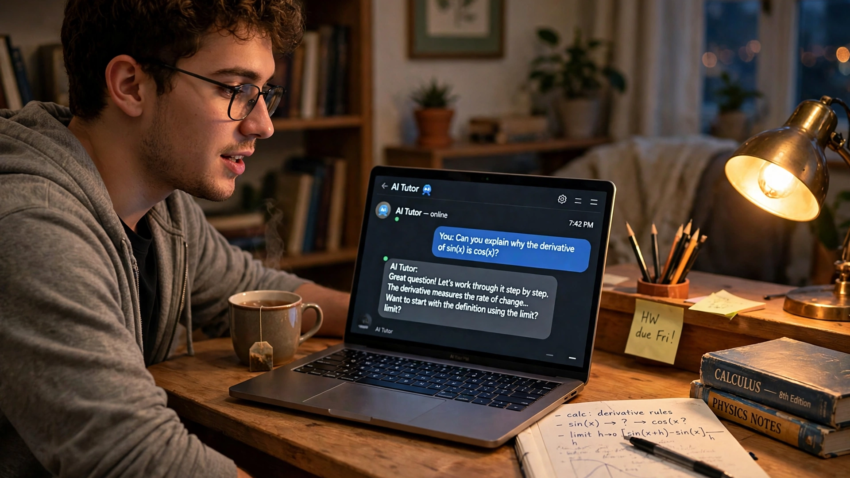
Ask a classroom of students today how they study, and AI will come up within the first minute. Some use it to explain a maths problem step by step. Some ask it to quiz them before a test. Teachers use it too, often quietly, to draft lesson plans or mark practice work faster. AI in education is no longer a future idea — it is already sitting in the homework routine of millions of families.
It helps to understand, at least roughly, what is going on underneath. These tools are built on models that learn patterns from huge amounts of text and examples, much like the systems described in what is a neural network. They do not truly understand a subject the way a good teacher does, but they are very good at producing clear explanations, examples and practice material on demand. That difference matters, and it shapes both the benefits and the risks. The theory behind the models also includes AI Disproves Exponential Time Hypothesis.
In short: AI in education works best as a helper, not a replacement. It can tutor, explain, quiz, translate and draft, giving students personal support and teachers back their time. But used carelessly, it can also do the thinking for students, weaken real skills and expose private data. The tool is not the problem or the solution — how it is guided is. The infrastructure behind these tools is debated in Why Are Data Centers Controversial.
How AI Helps Students Learn
The biggest change for students is personal attention. A teacher with thirty pupils cannot sit beside each one and re-explain a topic five different ways. An AI tutor can. It never gets tired, never sounds annoyed, and it will happily explain fractions with pizza slices, football scores or whatever example finally makes the idea click. For a first-hand account, see Claude for Education My Honest Experience.
Used well, that support looks like this:
- Step-by-step explanations. Instead of just giving an answer, a student can ask “why?” again and again until the logic makes sense.
- Practice on demand. Endless quiz questions, vocabulary drills and sample problems, generated at the student’s level and pace.
- Feedback on drafts. A student can paste in an essay and ask what is unclear, which paragraphs wander, and where the argument is weak — then do the rewriting themselves.
- Study planning. Breaking a big exam topic into smaller daily chunks, with reminders and review sessions.
The key phrase is “used well.” The same tool that explains a problem can also just hand over the finished answer. The difference is not the software; it is the habit the student builds around it.
Homework Help Without Doing the Homework
Homework is where AI in education gets its most honest test, because the temptation is obvious. A tired student, a difficult assignment, and an answer available in five seconds. It is easy to see why teachers worry.
There is a healthier way to use it, and many students discover it on their own. Ask the AI to explain the method, not solve the task. Ask for a similar example with different numbers. Write your own answer first, then ask what you missed. Treat it like a patient older sibling who knows the topic, not like a photocopier for finished work.
Parents can help by asking one simple question: “Show me how you got that.” If the student can explain the answer in their own words, the AI acted as a tutor. If they cannot, it probably acted as a shortcut — and shortcuts have a way of showing up later, in the exam hall, where no chatbot is allowed.
How AI Supports Teachers
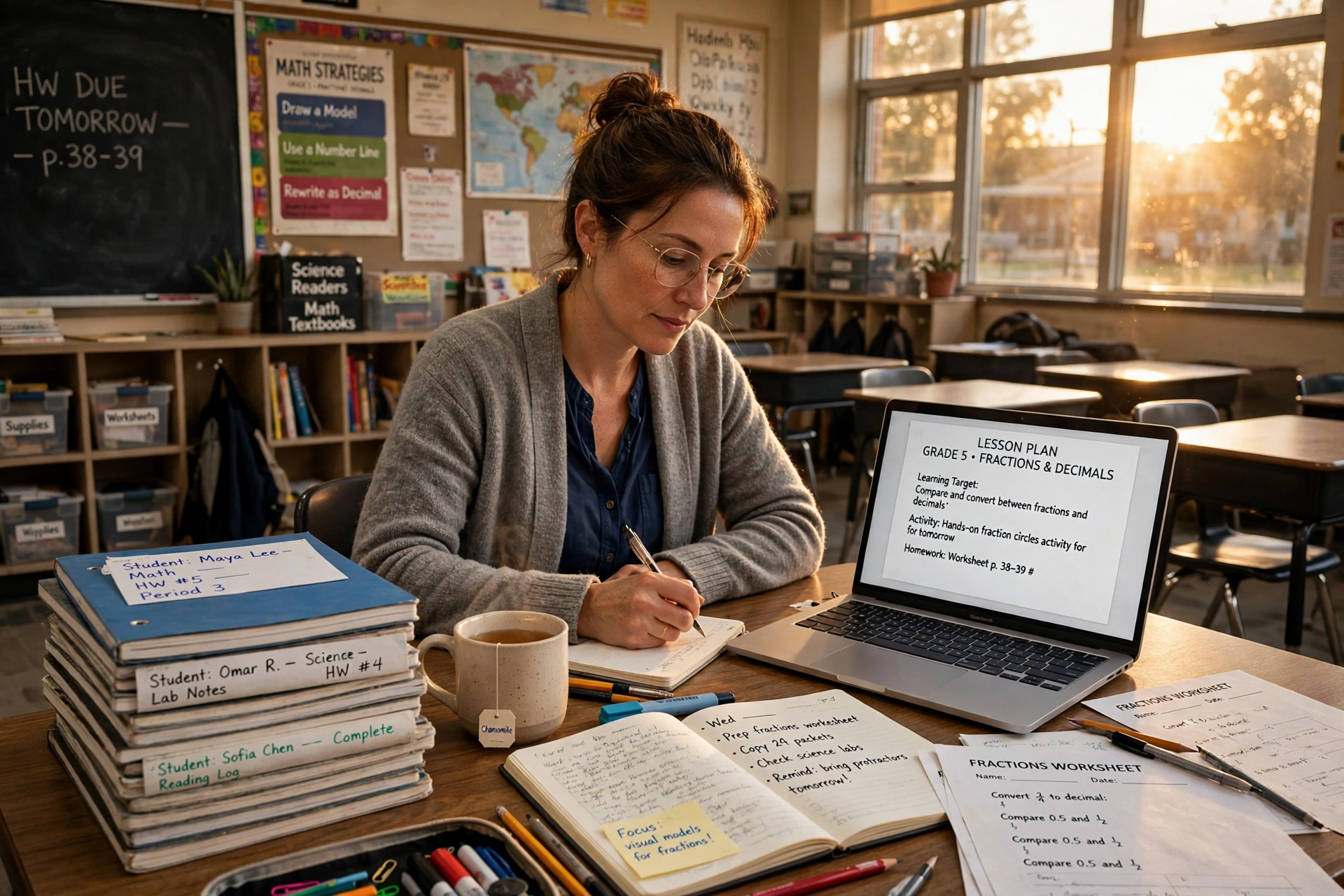
Teachers are often the most overworked people in the building, and much of their workload is not teaching at all. It is preparation, paperwork and marking. This is where AI quietly earns its place, among the many different types of AI now showing up in everyday work.
- Lesson planning. Drafting lesson outlines, discussion questions and activity ideas that the teacher then shapes to fit their actual class.
- Quiz and worksheet making. Generating practice questions at different difficulty levels, so faster and slower learners both get suitable work.
- Grading assistance. Checking routine answers, flagging common errors across a class set of work, and drafting feedback comments the teacher reviews before sending.
- Admin tasks. Summarizing meeting notes, drafting parent emails, and turning rough bullet points into clear handouts.
None of this replaces the teacher’s judgment. The AI produces the first draft; the teacher, who actually knows the students, makes the decisions. A quiz question can be technically correct and still be wrong for a particular class. A feedback comment can be polite and still miss the point. The human stays in charge — the machine just carries the heavy bags.
Language Learning and Everyday Practice
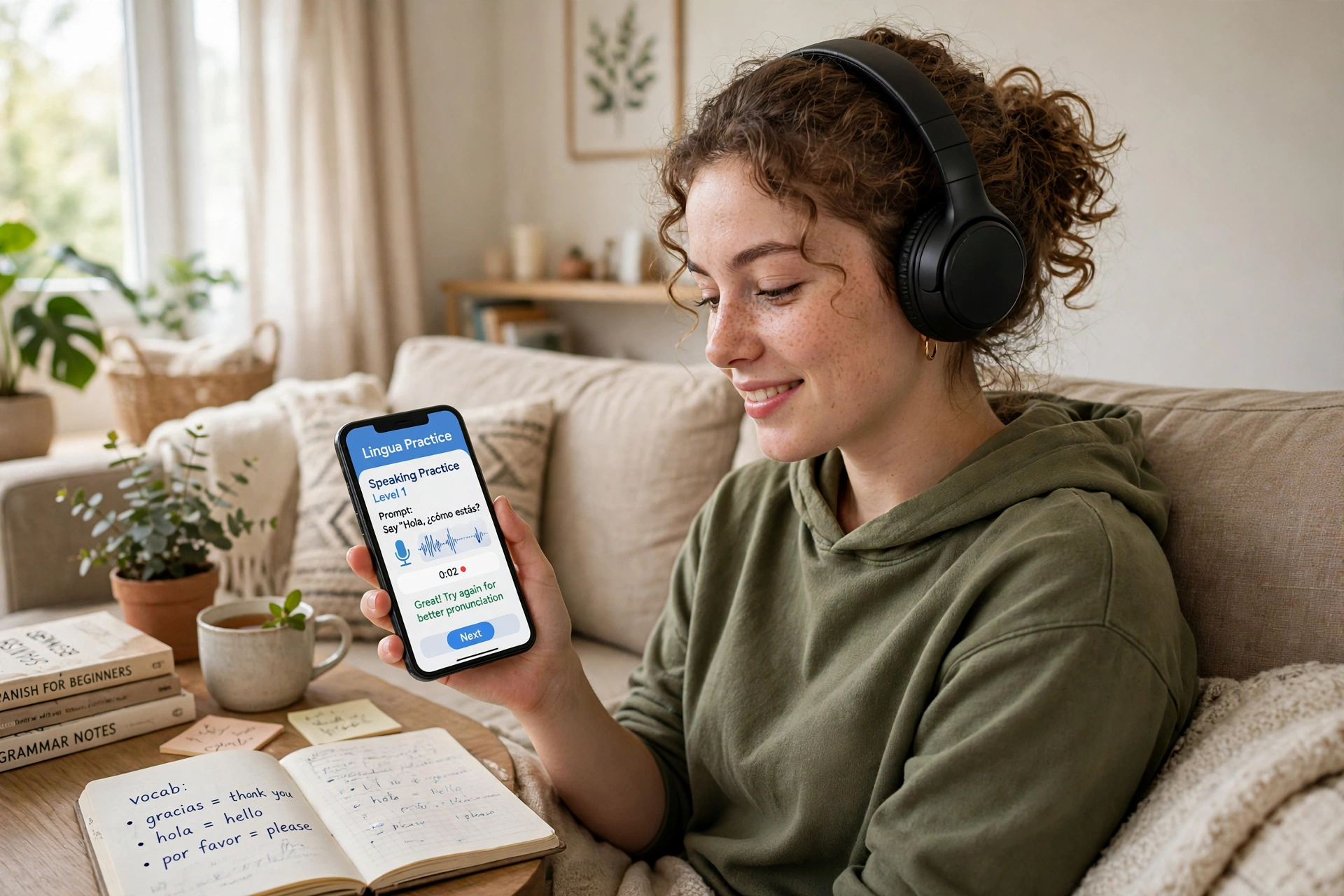
Language learning may be the most natural fit of all. Learning a language takes conversation, and conversation partners are hard to schedule. An AI can role-play a shopkeeper, a hotel receptionist or a friendly stranger at a bus stop, at any hour, without embarrassment when the learner makes a mistake — and mistakes are where learning actually happens.
Learners can ask for corrections in a gentle style or a strict one, request the same sentence at a simpler level, or practice listening with spoken replies. For families who speak one language at home and another at school, translation support can also bridge the gap, turning homework instructions and school letters into something everyone in the house can understand.
Accessibility — Learning Without Barriers
For some students, AI is not a convenience. It is the difference between keeping up and falling behind.
Text-to-speech tools let a student with reading difficulties listen to the same material their classmates read. Speech-to-text lets a student who struggles with writing get their ideas down first and tidy them later. Real-time translation helps a newcomer follow a lesson in a language they are still learning. Captions make video lessons usable for deaf and hard-of-hearing students.
These uses rarely make headlines, but teachers consistently describe them as some of the most meaningful. When the barrier is access rather than ability, removing the barrier changes everything. Similar benefits appear in health, as in AI in Medical Field.
AI in Education at a Glance
Here is the honest balance in one place — what each use offers, and what deserves a watchful eye.
| Use case | How it helps | What to watch out for |
|---|---|---|
| Personal tutoring | Explains topics repeatedly, at the student’s pace and level | Students accepting explanations without checking them |
| Homework help | Shows methods and examples, gives feedback on drafts | Copying finished answers instead of learning the skill |
| Teacher planning | Drafts lessons, quizzes and materials in minutes | Generic content that ignores the real class in front of the teacher |
| Grading assistance | Speeds up routine marking and spots common errors | Unfair or wrong marks if nobody reviews the output |
| Language learning | Conversation practice any time, without embarrassment | Over-polished, unnatural phrasing that ignores real usage |
| Accessibility | Text-to-speech, translation and captions open up lessons | Tools failing on accents, dialects or specialist vocabulary |
| Student data handling | Personalized paths based on progress and mistakes | Private information about children stored or shared carelessly |
The Honest Concerns
It would be dishonest to praise AI in education without naming the problems, because they are real.
Cheating and shortcuts. If a tool can produce a passable essay in seconds, some students will submit it. Schools are responding with more in-class writing, oral follow-up questions and tasks based on personal experience — work that is much harder to outsource.
Over-reliance weakening skills. Skills grow through struggle. If a student never wrestles with a hard paragraph or a stubborn equation, the underlying ability does not develop. The answer arrives, but the learning does not.
Student data privacy. These systems can collect a lot of information about children — their questions, mistakes, writing style and progress. Who stores that data, for how long, and for what purpose are questions every school should ask before adopting any tool. The wider debate around the purpose of AI is relevant here: a tool meant to help children learn should never quietly become a tool for profiling them. Security incidents show the stakes, as in Military Commissary Freezer Cyberattack.
Confident mistakes. AI can state wrong facts in a perfectly polished tone. A student who cannot yet judge the subject has no easy way to spot the error, which is why checking against a textbook or teacher still matters.
Why Guidance and Rules Matter
Every concern above has the same shape: the technology is powerful, fast and indifferent, so the guidance around it has to be human. Schools that handle AI well tend to do a few simple things. They say clearly what is allowed and what counts as cheating. They teach students to question AI answers, not just collect them. They check where student data goes before signing up for a platform.
This is the same lesson appearing across the whole AI world, from classrooms to companies: adoption without oversight eventually produces an AI governance wake-up call. Education is simply where the stakes are easiest to see, because what is being formed is not a product or a report. It is a person’s mind.
The realistic future is not AI in every lesson or AI banned from every classroom. It is AI with training wheels — available, explained, supervised, and always secondary to the real goal, which is a student who can think without it. Research tools are advancing too, as in AI Scientist.
Frequently Asked Questions
It means using artificial intelligence tools to support teaching and learning. For students, that includes tutoring, explanations, practice questions and feedback on drafts. For teachers, it includes help with lesson planning, quiz making and routine marking. The AI assists the people involved; it does not replace the teacher or do the learning for the student.
It depends on how it is used. Asking AI to explain a method, show a similar example or comment on your own draft is a legitimate study habit. Copying a finished answer and submitting it as your own work is cheating, in the same way copying from a friend would be. Most schools judge the difference the same way: the submitted work must be the student’s own thinking.
No. AI can explain, drill and draft, but it cannot know a class, notice a struggling or unhappy student, manage a room, or make fair judgment calls about real children. Teachers do far more than deliver information, and the parts of their job that matter most — motivation, care, judgment and trust — are exactly the parts a model cannot do.
The main risks are students over-relying on it and skipping the struggle that builds real skill, submitting AI work as their own, exposure of children’s private data through learning platforms, and confident but wrong answers being accepted without checking. Clear school rules, teacher oversight and basic privacy checks reduce most of these risks.
Start with one habit: after any AI-assisted homework, ask your child to explain the answer in their own words. If they can teach it back, the AI acted as a tutor. Encourage asking the tool for explanations and examples rather than final answers, keep devices and accounts age-appropriate, and check what personal information any learning app asks for before signing up.
Careful schools check a few things before adopting a tool: what student data it collects and where that data is stored, whether parents can see or delete it, whether the content fits the curriculum, and whether teachers can review what students produce with it. They also pilot tools with one class before rolling them out widely, and set written rules for students on what use is allowed.

Hamad Arshad writes and edits AI Next Top from Rahim Yar Khan, Pakistan. He has worked in SEO and digital marketing for over 7 years and started this site to explain AI tools and news in plain language for non-technical readers. Every guide here is checked against the real tool before it is published.








Leave a Reply