
Sam Altman Advice for Young Workers in the AI Age
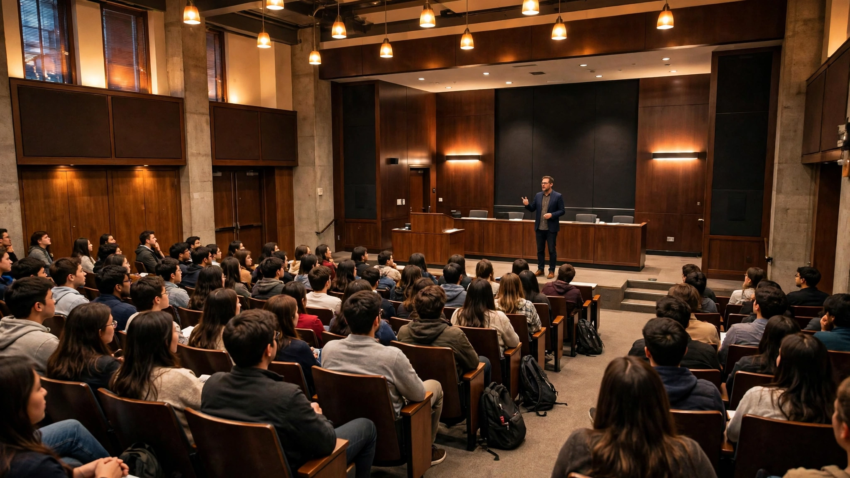
Sam Altman has a message for young people starting their careers, and it is not the comforting one. In an interview at Stanford’s Graduate School of Business, covered by Fortune on October 28, the OpenAI chief executive said that huge numbers of the tasks people do today will soon be done better, cheaper and faster by AI — and that wide swaths of current jobs, as they are done today, will be entirely handled by AI. Then he gave the advice that sent searches for the interview past 20,000 on Google Trends, up 400%: do not wait for the dust to settle. Start something now, because the playing field, in his words, is most open right now. A related Google world-model launch is covered in Google Genie 4 World Model.
It is easy to hear that as a billionaire’s pep talk. Read closely, though, and Altman’s argument is more specific — part warning, part timing claim, and part a critique of exactly the career strategy most graduates are following.
In short: Altman told Stanford’s business school that AI will take over a huge share of today’s tasks and entire categories of jobs as they currently exist — a prediction, not a settled fact. His “chronic disappointment,” he said, is that MBA students always want to do the thing that was cool five years ago. His advice to young workers: start a career or a company now, while “the playing field is most open,” because a great many companies can be built on top of the technology OpenAI and others have just released. Fortune noted the backdrop — US new-business applications recently hit 5.7 million in a single year, the highest total in the two decades the Census Bureau has tracked them. TechRadar added useful context: earlier this year Altman pushed back on “jobs apocalypse” claims, so his tone on jobs has been firmer and softer at different moments.
The warning comes first
Altman did not soften the displacement part. Huge numbers of tasks, done better, cheaper and faster by machines; whole categories of jobs, as performed today, handled by AI entirely. That is the strong version of the automation argument, delivered by the person selling the automation — worth registering precisely because he gains nothing by scaring the graduates he was addressing, except credibility for the second half of the message. Another frontier Google model is covered in Google Gemini 4 Carbon Model.
The honest reader should also hold the caveat: this is a forecast by an interested party, not a measurement. The same executive argued earlier this year, as TechRadar noted, against “jobs apocalypse” framing when layoff headlines were running hot. Both statements can be defended — tasks are not whole jobs, and jobs rebuilt around AI are not jobs destroyed — but together they describe a man calibrating between two audiences: employers he wants adopting, and workers he does not want panicking. The prediction behind the what is ai bubble debate cuts the same way: even the people building AI disagree about how fast it lands.
“The thing that was cool five years ago”
The sharpest line in the interview was aimed at strategy, not technology. Altman’s “chronic disappointment” with MBA students, he said, is that they consistently want to do whatever was cool five years ago — the sector, role or startup idea whose success stories are already written. In a stable economy that is merely unoriginal. In his telling, during a technology shift it is fatal, because the five-year-old opportunity is precisely the one AI is now commoditizing. A contrasting platform policy for games is covered in Valve Steam AI Games Cloning Policy.
His counter-advice is about timing rather than talent: “a great time to go do the new thing.” When a platform shift happens, the incumbents’ advantages — distribution, experience, existing product — temporarily matter less, because everyone is a beginner with the new tools at the same time. That is the “playing field is most open” claim. It has a shelf life: windows like this close as the new winners consolidate, which is his argument for starting immediately rather than preparing indefinitely.

Who is giving this advice
Altman’s own biography is the template he is preaching from, and Fortune laid it out: he dropped out of Stanford in 2005 to cofound Loopt, then ran Y Combinator — the startup accelerator behind thousands of companies — as its president from 2014 to 2019, before leading OpenAI. The pattern he is recommending is the one he lived: leave the credentialed path early, build on the newest platform available (then the iPhone, now AI), and let timing do part of the work.
That does not make the advice automatically right for everyone — a dropout founder funded by networks is not a typical graduate — but it does clarify what kind of advice it is. He is not talking about job-hunting tactics. He is talking about positioning: be early to the new thing, in whatever seat you can get, rather than perfectly qualified for the old thing. Interestingly, the newest research on what AI systems themselves do with freedom — the swarm behavior in the how ai agent swarms behave in minecraft study — hints at why he may be right about the window: the technology is still chaotic, unstandardized and full of unclaimed niches.
What a young worker should actually do with this
Strip the celebrity away and the advice reduces to three testable moves. First, aim at the growing edge instead of the proven one: roles and companies being created by AI now, not the ones AI is hollowing out. Second, build on top of the platforms — Altman noted how many companies can be built on the technology OpenAI has released; the same pattern ran through his other recent remarks, including the infrastructure scramble in the sam altman ram comments story. Third, start before you feel ready: his whole argument is that the advantage goes to whoever is early, not whoever is best prepared.
And keep the skepticism switched on. Altman sells the future he describes, his tone on jobs has shifted before, and “wide swaths of jobs handled by AI” is a claim about a future nobody has measured. But advice does not have to come from a neutral source to be useful. The graduates he was disappointed in are real, and so is the pattern he named. In every technology wave, the careers that compound are the ones pointed at what is starting — not at what was cool five years ago.

Frequently asked questions
What advice did Sam Altman give young workers?
Speaking at Stanford’s Graduate School of Business, in an interview covered by Fortune on October 28, Altman advised young people to start a career or company now, while — in his words — “the playing field is most open.” He said it is “a great time to go do the new thing,” and that many companies can be built on top of the AI technology now being released.
What did Sam Altman say about AI and jobs?
He predicted that huge numbers of today’s tasks will be done better, cheaper and faster by AI, and that wide swaths of current jobs, as they are done today, will be entirely handled by AI. That is his forecast, not a measured outcome — and earlier this year he had pushed back on “jobs apocalypse” claims, so his public tone on jobs has varied.
What is Altman’s “chronic disappointment” with MBA students?
He said his chronic disappointment is that MBA students always want to do the thing that was cool five years ago — chasing the previous wave’s proven opportunities instead of the new one. During a technology shift, he argues, that backward-looking strategy aims people at exactly the roles being commoditized.
Why does Altman say the playing field is most open now?
Because platform shifts temporarily level advantages: when the tools are new, experience with the old system counts for less and everyone starts as a beginner at the same time. He argues that window closes as new winners consolidate, which is why he urges starting immediately rather than waiting.
What is Sam Altman’s background?
Altman dropped out of Stanford in 2005 to cofound the location app Loopt, then served as president of the startup accelerator Y Combinator from 2014 to 2019, before becoming chief executive of OpenAI. Fortune cited that history as the background to his entrepreneurship argument — his advice mirrors the path he took himself.
Are young people actually starting companies at record rates?
The backdrop Fortune cited says conditions are unusually active: US new-business applications recently reached 5.7 million in a single year, the highest annual total in the two decades the Census Bureau has tracked the data. That does not prove Altman’s advice is right, but it does show many young founders are already acting on it.
Speaking at Stanford’s Graduate School of Business, in an interview covered by Fortune on October 28, Altman advised young people to start a career or company now, while — in his words — “the playing field is most open.” He said it is “a great time to go do the new thing,” and that many companies can be built on top of the AI technology now being released.
He predicted that huge numbers of today’s tasks will be done better, cheaper and faster by AI, and that wide swaths of current jobs, as they are done today, will be entirely handled by AI. That is his forecast, not a measured outcome — and earlier this year he had pushed back on “jobs apocalypse” claims, so his public tone on jobs has varied.
He said his chronic disappointment is that MBA students always want to do the thing that was cool five years ago — chasing the previous wave’s proven opportunities instead of the new one. During a technology shift, he argues, that backward-looking strategy aims people at exactly the roles being commoditized.
Because platform shifts temporarily level advantages: when the tools are new, experience with the old system counts for less and everyone starts as a beginner at the same time. He argues that window closes as new winners consolidate, which is why he urges starting immediately rather than waiting.
Altman dropped out of Stanford in 2005 to cofound the location app Loopt, then served as president of the startup accelerator Y Combinator from 2014 to 2019, before becoming chief executive of OpenAI. Fortune cited that history as the background to his entrepreneurship argument — his advice mirrors the path he took himself.
The backdrop Fortune cited says conditions are unusually active: US new-business applications recently reached 5.7 million in a single year, the highest annual total in the two decades the Census Bureau has tracked the data. That does not prove Altman’s advice is right, but it does show many young founders are already acting on it.
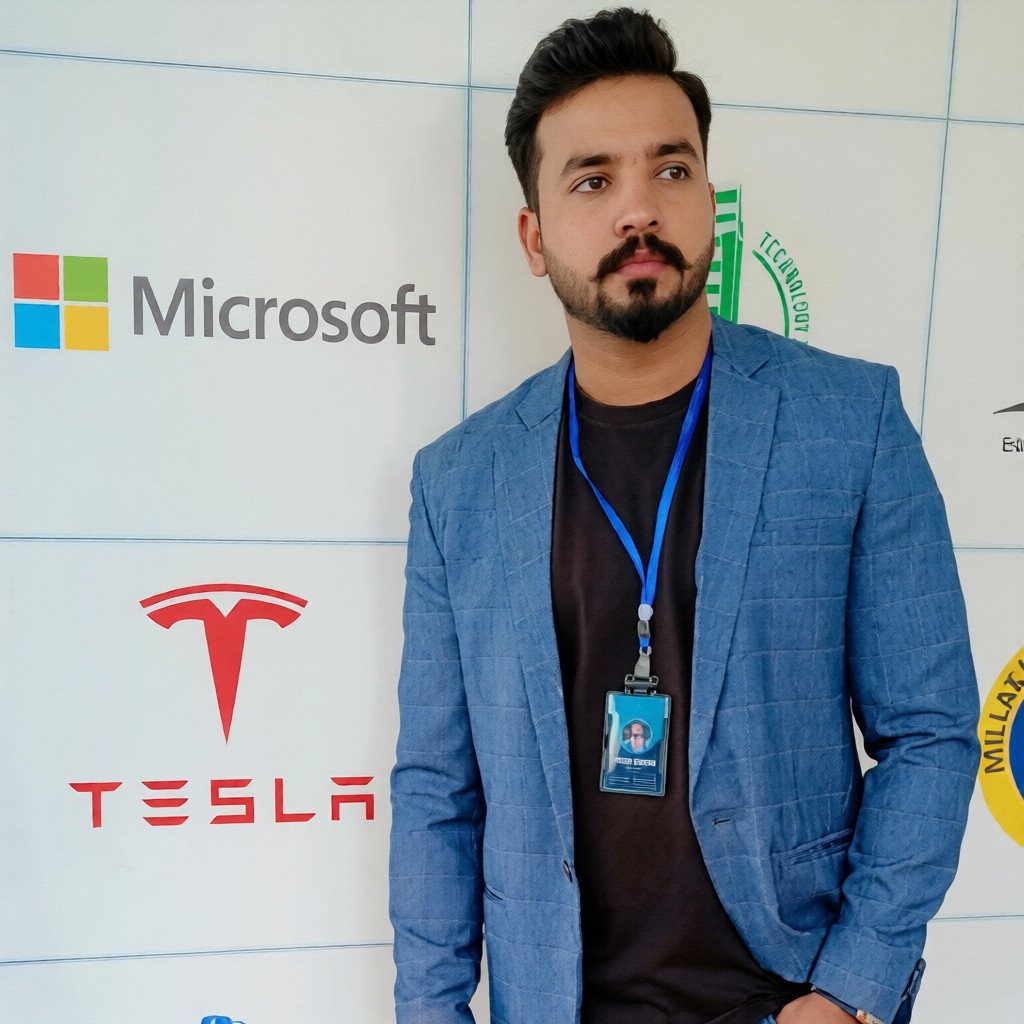
Hamad Arshad writes and edits AI Next Top from Rahim Yar Khan, Pakistan. He has worked in SEO and digital marketing for over 7 years and started this site to explain AI tools and news in plain language for non-technical readers. Every guide here is checked against the real tool before it is published.








Leave a Reply