
Sam Altman RAM Comments
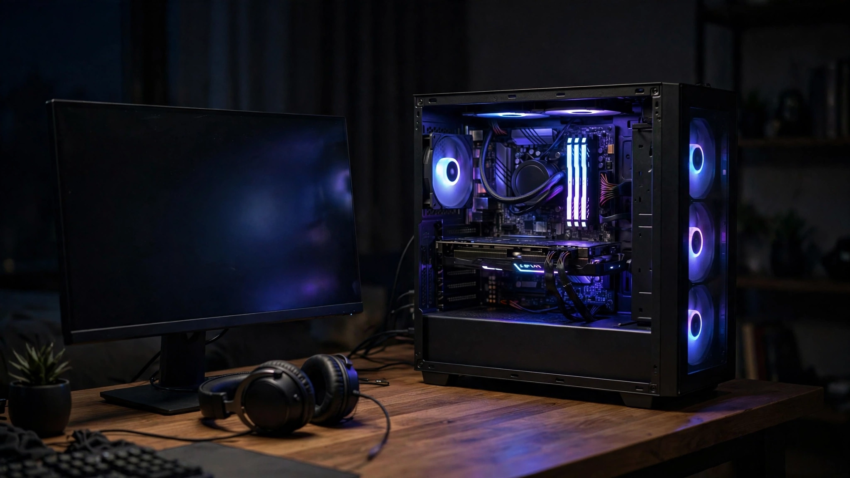
Sam Altman is trending for the wrong reason this week. The OpenAI CEO sat down for a relaxed interview on the Cheeky Pint show with Stripe president John Collison, and one answer about computer memory has followed him everywhere since. Asked about people running AI models on their own machines, Altman argued that the world’s limited supply of memory would be far better used inside data centres than sitting inside home computers. PC owners, already paying painful prices for RAM, did not take it kindly. For his wider advice, read Sam Altman Advice for Young Workers in the AI Age.
Within hours the clip was everywhere, and searches for Sam Altman spiked on Google Trends. Some of the anger is about tone. Most of it, though, is about money — because the same AI boom Altman leads is a big part of why the memory in your next PC costs so much more than it used to.
In short: In a Cheeky Pint interview, Sam Altman said that from a global allocation view it is “quite terrible” for everyone to keep a share of the world’s limited DRAM supply in their own computer, where it sits used only about 5% of the time. He argued memory should be concentrated in the cloud, where it can be used almost constantly. PC builders and gamers reacted with fury, pointing out that AI data centre demand — led by OpenAI’s own giant deals — is exactly what has made RAM scarce and expensive in the first place. Gamers following this debate may also be interested in Valve Steam AI Games Cloning Policy.
What Sam Altman actually said
The question behind the comments was about local inference — running open AI models on your own hardware instead of paying a cloud company by the month or by the token. Many people assume that trend reduces the need for giant data centres. Altman said the intuition is backwards. For another interactive model, see Google Genie 4 World Model.
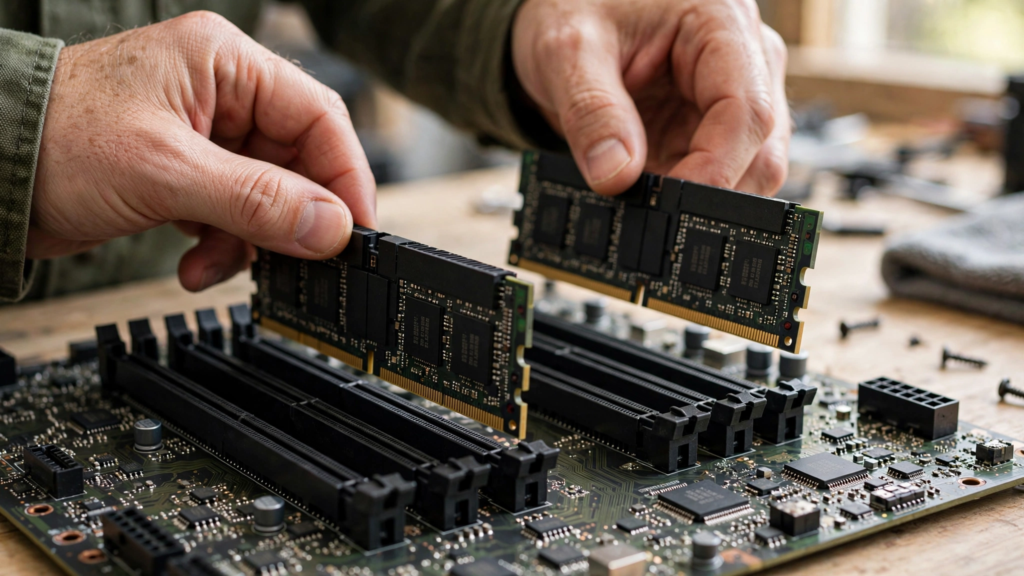
His reasoning runs like this. The world can only produce so much silicon, and memory — DRAM, the chips that hold data while a computer or an AI model is working — is one of the tightest bottlenecks. A home PC’s memory spends most of its life idle: the machine is asleep, switched off, or doing light tasks that barely touch it. A memory chip inside a busy AI data centre, by contrast, works almost around the clock serving thousands of people. So if you care about squeezing the most useful work out of a scarce resource, he argued, you want maximum utilisation in the cloud, not small pools of memory scattered across millions of desks.
As a piece of pure efficiency logic, it is not nonsense. As public messaging from the head of OpenAI, it landed very differently.
Why PC users reacted so badly
Timing is the first problem. Memory prices have climbed sharply because Samsung, SK hynix and Micron have shifted production towards the high-bandwidth memory and server DRAM that AI accelerators consume. Ordinary buyers feel that shift every time they price a laptop, a phone or a gaming PC upgrade — the same squeeze that also helped push chip stocks around this week in the wider nvda stock drop.
The second problem is who is doing the buying. OpenAI’s Stargate buildout includes supply agreements with Samsung and SK hynix covering a huge share of global DRAM wafer output — by some estimates close to 40% of the world’s supply for the coming years. So when the person whose company has locked up more memory than anyone suggests consumers holding memory is the wasteful part, the reaction writes itself. Commenters online summed it up roughly as: the man who helped make RAM scarce now says your share of it is the problem.
There is also a values argument underneath the price argument, and it connects to the bigger question of who owns ai. A PC is not a shared utility. People buy memory the way they buy a car that sits parked most of the day — not to maximise global efficiency, but because it is there, instantly, the moment they want it, under their control. Altman’s logic, followed to its end, points towards renting intelligence by the token from a handful of cloud providers forever. Many people hear that less as an efficiency plan and more as a business model describing itself.
The case for running AI locally
The backlash is not just emotional. Local AI has real advantages that the utilisation argument skips over.
Privacy is the biggest one. A model running on your own machine means your prompts, documents, photos and code never leave the room. For a lawyer drafting something sensitive, a doctor summarising notes, or a company working on unreleased products, that is not a luxury — it is the whole point. The different types of ai now available include capable open models designed exactly for this kind of private, offline work.
Ownership matters too. A local model cannot be taken away, repriced, rate-limited or quietly changed overnight. It works on a plane, in a village with poor connectivity, and during an outage at a data centre on another continent. And for developers, local models are where experimentation happens: you can fine-tune, break things and learn without a meter running.
None of this denies that the cloud is more efficient per chip-hour. It just says efficiency is not the only thing people are buying when they buy a computer.
What this means for the price of your next PC
Strip away the argument and one practical fact remains: AI data centres and home computers now compete for the same memory supply, and the data centres are winning. Memory makers earn far more from AI orders, so consumer supply stays tight and prices stay high. Analysts watching the memory market expect the shortage to run well beyond next year, which is why a mid-range RAM kit or a new console costs what it does right now. Related context on energy and emissions is available in Google Gemini 4 Carbon Model.
Altman himself said he hopes the costs of energy and production fall, and admitted that for that to happen, supply has to rise a lot. On that point, at least, he and the gamers agree. Until supply catches up, expect every new AI data centre announcement to be read two ways: as progress by the industry building it, and as a price rise by everyone shopping for a PC. It is also why these comments feed straight into the wider what is ai bubble debate — the argument is no longer just about valuations, but about who gets the physical ingredients of computing.
So was he wrong?
On the narrow maths, not entirely. Idle capacity is idle capacity, and a shared data centre genuinely does extract more work from each memory chip than a sleeping laptop. If the world had to ration DRAM like wartime steel, his allocation argument would be the sensible one.
But computers were never rationed utilities, and the comment ignored why the rationing mood exists at all. The shortage is not caused by teenagers keeping 32GB in a gaming rig. It is caused by the largest technology buildout in history, led by Altman’s own company, bidding for the same chips. Telling consumers their small share is the wasteful part — while your firm signs deals for a huge slice of global output — was never going to land as neutral systems thinking.
The likely outcome is boring and predictable. The interview will fade, the searches will cool, and the structural fight over memory will continue quietly in prices. If you are planning a PC build, the useful takeaway is simple: memory is a contested resource now, buy when prices dip rather than waiting for a return to the old normal, and expect local AI and cloud AI to keep arguing — in every sense — for the same chips.
Frequently asked questions
In a Cheeky Pint interview, the OpenAI CEO argued that from a global allocation perspective it is “quite terrible” for everyone to hold part of the world’s limited DRAM supply in their own computer, where it is used only about 5% of the time. He said a supply-constrained world should aim for maximum utilisation in the cloud instead.
Because memory prices have risen sharply due to AI data centre demand, and OpenAI itself has signed supply deals covering a very large share of global DRAM output. Critics say it is unfair for the biggest buyer of memory to describe consumers’ small share as the wasteful part, and many also value owning and controlling their own computers.
DRAM is the fast working memory used in PCs, phones, consoles and AI servers. It is scarce because memory makers have shifted production towards the high-bandwidth memory AI accelerators need, while data centre orders have surged. Consumer supply has tightened as a result, pushing prices up across laptops, PCs and consoles.
It is less efficient per chip than a busy data centre, because a home machine sits idle much of the time. But local AI offers privacy, offline access, no subscription costs and full control over the model, which is why many users and businesses consider the trade-off worth it. Efficiency is only one part of the value.
No. He was making an argument about how the world’s memory supply is best allocated in a shortage, not proposing a policy or a ban. The strong reaction came from the implication that cloud computing — the business OpenAI sells — is the rightful home for scarce memory, rather than personal computers.
Not quickly, on current signals. Memory supply is expected to stay tight well beyond next year because AI orders keep growing faster than new production. Altman himself said costs will only fall if supply rises substantially. Buyers planning a build may do better buying during price dips than waiting for a full return to old prices.

Hamad Arshad writes and edits AI Next Top from Rahim Yar Khan, Pakistan. He has worked in SEO and digital marketing for over 7 years and started this site to explain AI tools and news in plain language for non-technical readers. Every guide here is checked against the real tool before it is published.








Leave a Reply