
AI Model Deployment Challenges Production
There’s a moment every AI team knows well. The model looks brilliant in testing. The accuracy numbers are great, the demo runs smoothly, and everyone is quietly confident. Then the model goes live, real people start using it, and within weeks the results begin to wobble. Predictions feel off. Costs creep up. Nobody is quite sure when things started slipping, or why.
This gap between a model that works in the lab and a model that works in the real world is where most AI projects quietly succeed or fail. Building the model is only half the job. The other half is everything that happens after release, and it is the half teams most often underestimate. That is exactly why understanding what is mlops has become so valuable — it is the discipline built around running models reliably once they leave the notebook and meet real traffic.
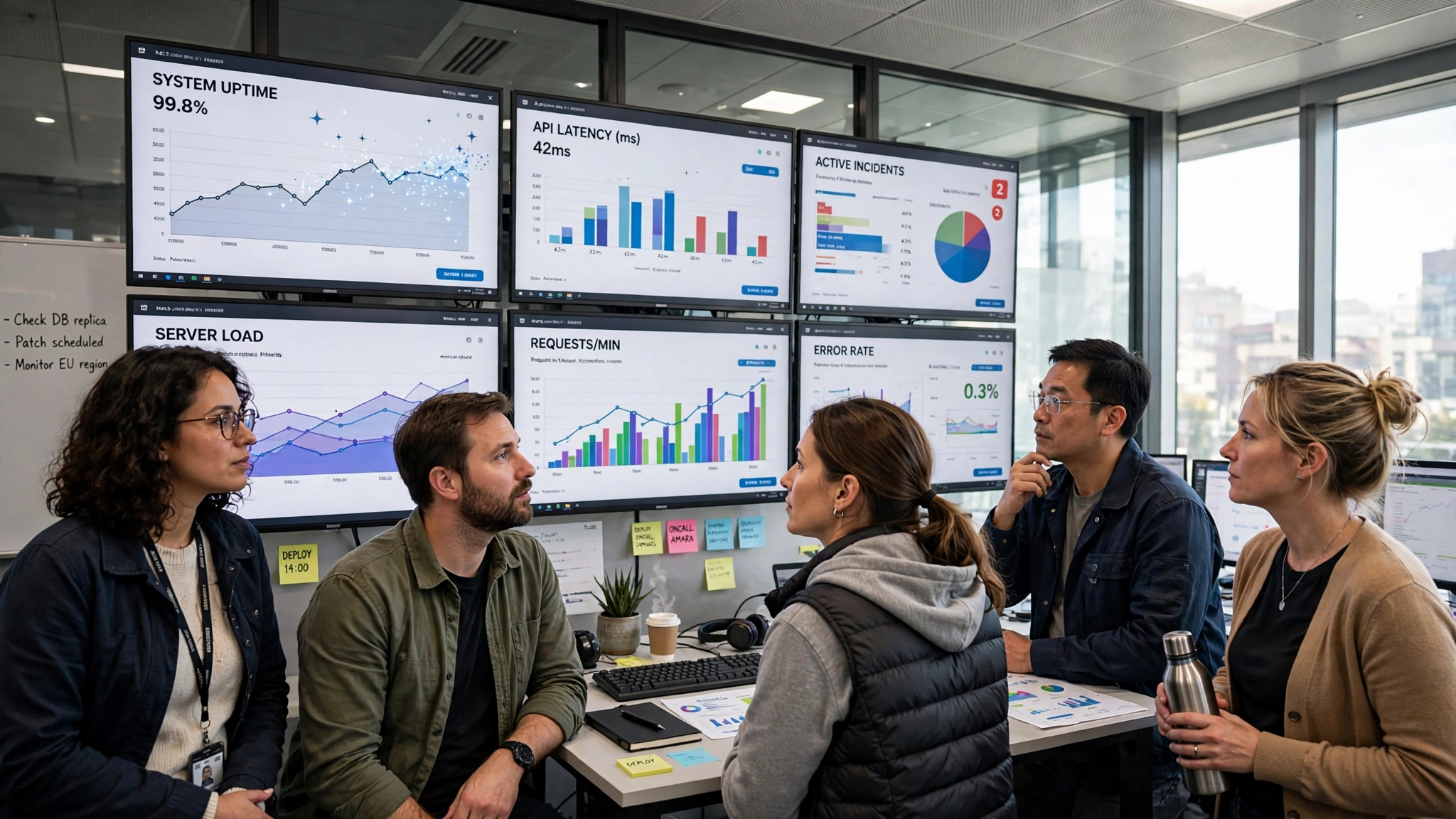
In short — AI models struggle in production because the real world refuses to sit still. Data changes, users behave in unexpected ways, traffic grows, and small problems hide until they become expensive ones. The teams that cope best treat deployment as the start of the model’s life, not the finish line. They monitor constantly, retrain on a schedule, test changes before release, and always keep a way back when something breaks.
Why a great test score guarantees almost nothing
A model is trained and tested on a snapshot — a fixed pile of historical data that never changes. Production is the opposite of a snapshot. It is live, messy, and constantly shifting. The questions users ask change with the seasons. New products appear that the model has never seen. A marketing campaign sends a wave of visitors who behave nothing like the ones in the training data.
In testing, the model is judged on data it has effectively studied for. In production, every input is new, so a small drop from test performance is normal. The real danger is not that first dip. It is the slow slide afterwards, when nobody is watching closely enough to notice.
Data drift — when the real world moves on
Ask experienced engineers which production problem bites hardest, and drift is usually near the top of the list. Drift is what happens when the live data gradually stops resembling the data the model learned from. Customer habits shift. Language evolves. Prices change, competitors launch, sensors age. The model does not know any of this happened. It keeps answering yesterday’s questions with yesterday’s logic, confidently and wrongly.
The tricky part is that drift rarely announces itself. Accuracy does not collapse overnight. It erodes, a fraction at a time, while dashboards still look calm. A recommendation model slowly pushes products people stopped wanting. A fraud model misses new attack patterns because they did not exist when it was trained. By the time a human notices, the model may have been quietly underperforming for months.
Slow answers and growing bills at scale
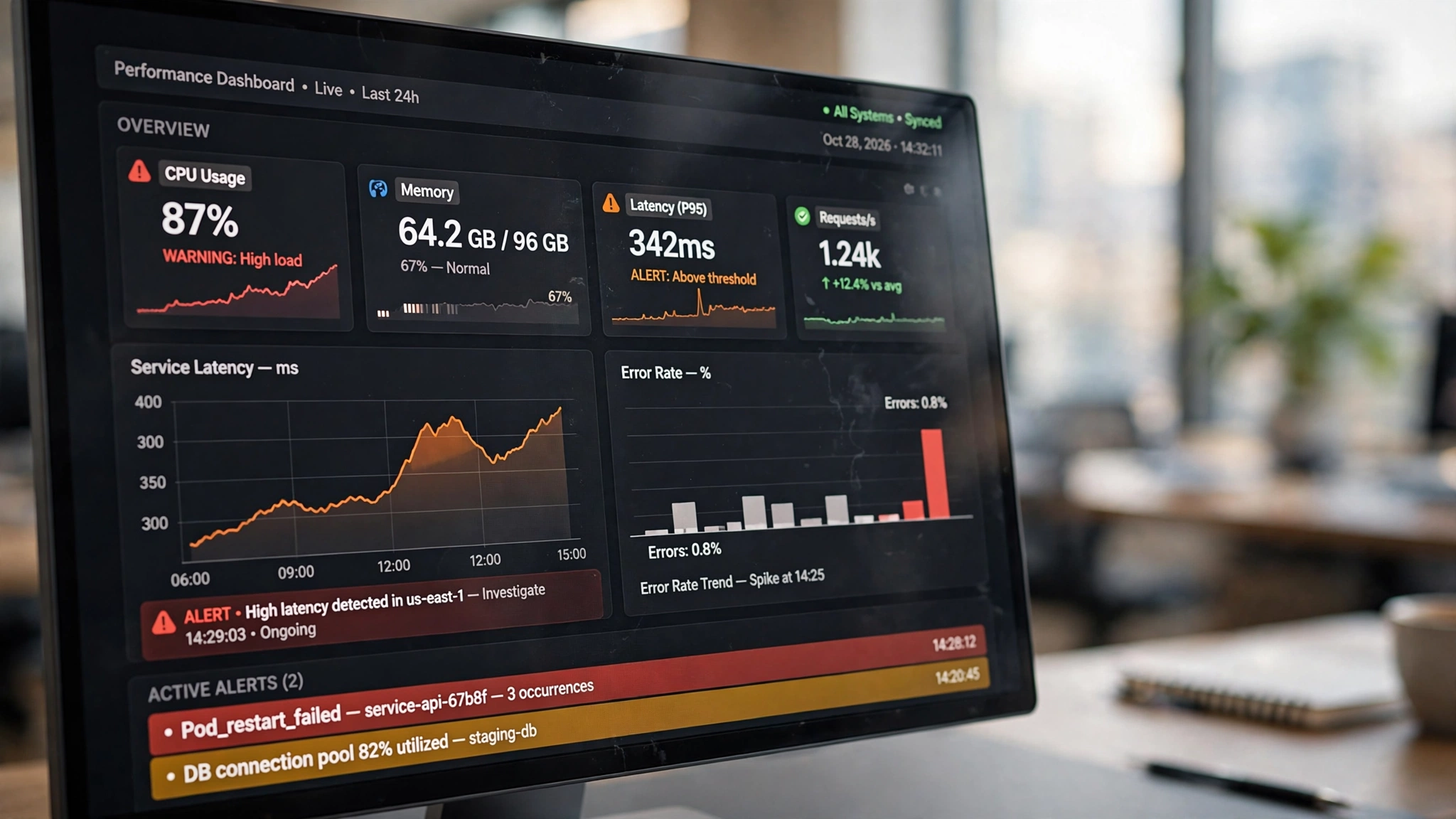
A model that answers in half a second for ten testers can buckle when ten thousand people arrive at once. Latency is a real product problem, not a technical footnote. Users abandon slow features, and an AI assistant that makes people wait feels broken even when its answers are excellent. For scalable content production, see Best AI-Driven Tool for Scalable Social Media Video Production.
Then there is the bill. Every prediction costs computing power, and modern models — especially large ones — are hungry. Traffic that doubles can double the spend overnight. Teams regularly discover that the model which was cheap to run during a pilot becomes one of the biggest line items in the budget at full scale. Shrinking the model, caching common answers, and routing simple requests to smaller models all help, but each fix involves trade-offs someone has to think through.
Messy live data breaks quiet assumptions
Training data gets cleaned, filtered, and lovingly prepared. Live data does not care about any of that. It arrives with missing fields, strange formats, duplicate entries, typos, and the occasional input nobody imagined a user would type. A pipeline expecting a date in one format receives it in another, and suddenly a whole feature is making decisions on garbage.
Good teams learn to be suspicious of their own inputs. They validate data before it reaches the model, reject or flag what looks wrong, and log strange cases instead of silently swallowing them. It is unglamorous work. It also prevents a surprising share of production incidents. For a deeper look at data problems, see What Challenges Does Generative AI Faces With Respect to Data.
Silent failures and the monitoring problem
Here is the uncomfortable truth about models in production — they almost never crash. A broken server throws errors and sets off alarms. A degrading model just keeps answering, politely and plausibly, while being wrong. There is no red warning light unless you build one yourself.
That is why monitoring matters so much, and why it has to go further than checking whether the system is up. Teams need to watch the shape of incoming data, the distribution of predictions, and whatever quality signals they can measure — user corrections, complaint rates, downstream results. When those numbers move, something in the world or the system has changed, and it is time to look closer. Keeping this watching brief organised is much easier with a unified ai governance architecture behind it, so ownership of alerts and responses is clear instead of scattered.
Version chaos — which model did that
Six months after launch, a strange question tends to surface. A customer complains about a bad decision the system made weeks ago, and someone asks the obvious question — which version of the model made that call, trained on which data, with which settings? In far too many teams, nobody can answer. Models get retrained, tweaked, and redeployed informally. Old versions linger. Experiments leak into production.
The fix is discipline borrowed from regular software. Every model version gets registered with its training data, settings, and test results. Deployments are recorded. Any past decision can be traced back to the exact model that produced it. This record keeping sits naturally on top of the pillars of ai platform architecture, because without a solid platform underneath, version discipline tends to collapse into spreadsheets and memory.
Security and privacy cannot be an afterthought
A production model touches real people’s data, and that brings responsibilities a lab experiment never has. Training records can leak through careless queries. Attackers probe models to extract information or manipulate outputs. Regulations in many places now demand to know what data was used, why a decision was made, and how a person can challenge it.
None of this requires paranoia, just basics done properly. Limit who and what can access the model. Log requests. Strip personal details where they are not needed. Think about abuse cases before launch, not after the first incident. These habits connect directly to the wider lesson that ai transformation is a problem of governance as much as it is a technology project — rules and accountability are what keep a powerful system safe to run.
The handoff gap between builders and runners
In many organisations, the people who build models are not the people who keep them running. Data scientists think in experiments and accuracy. Engineers think in uptime and incidents. Both are right, and the model suffers in the space between them — a beautiful model packaged in a way nobody can deploy, or a rock-solid pipeline serving a model nobody maintains.
Healthy teams close that gap early. Engineers are involved before training finishes, data scientists stay reachable after release, and documentation explains what the model expects, what it is bad at, and what to do when it misbehaves. Simple — and one of the highest-value changes a team can make. For young workers entering this field, see Sam Altman Advice for Young Workers in the AI Age.
How good teams handle each challenge
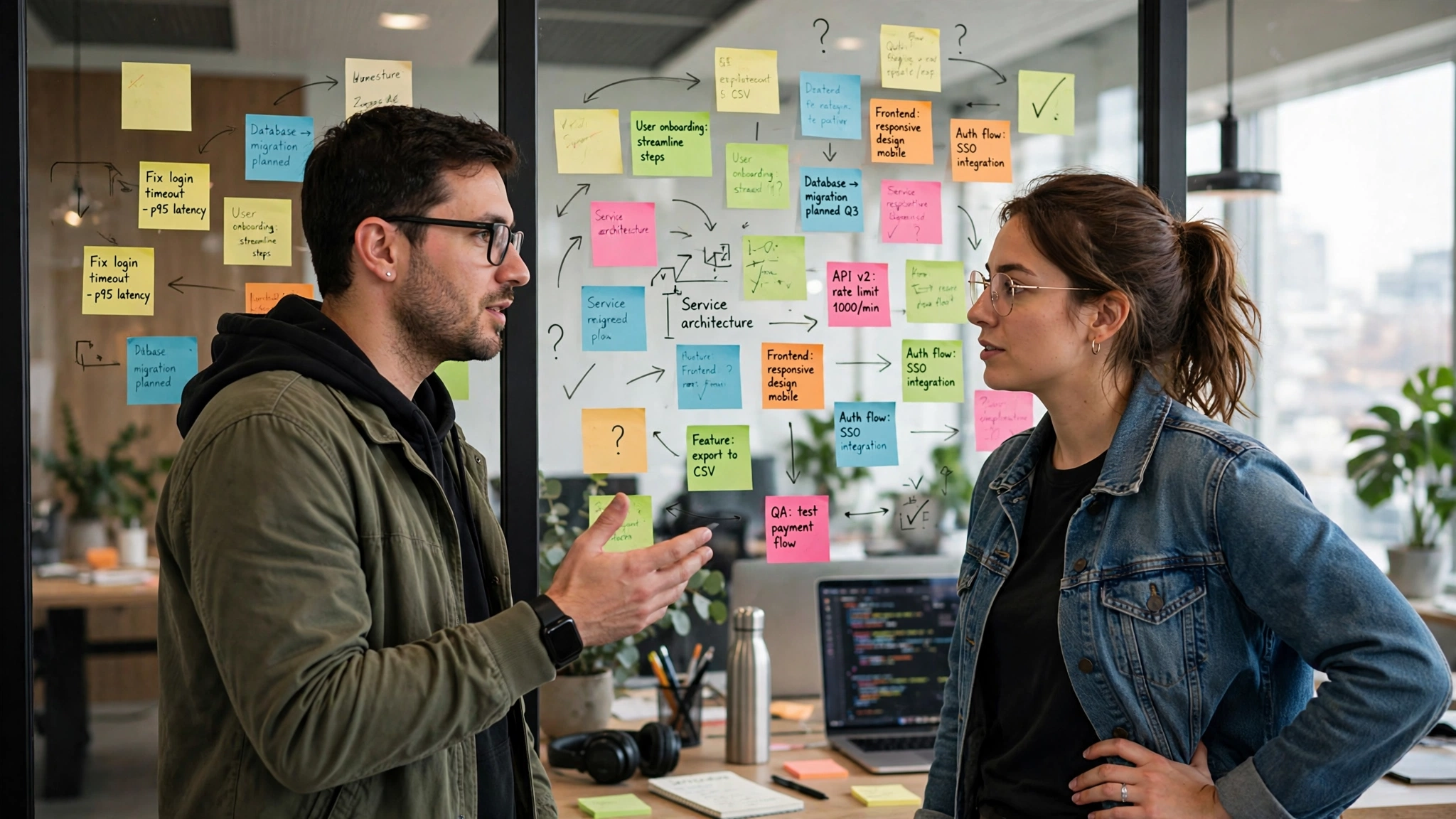
None of these problems is unsolvable. The teams that run models well share a handful of habits, applied consistently rather than heroically.
They monitor from day one, watching data, predictions, and quality signals together. They retrain on a schedule — and whenever drift detectors say the world has moved — instead of waiting for complaints. They test new versions against the current one on real traffic samples before anyone switches over, a practice often called shadow or canary release. And they keep the previous version ready to restore, so a bad release becomes a minor hiccup rather than an outage. For help choosing between models, see Best ChatGPT Model in 2026: Which One You Should Actually Use.
| Challenge | What good teams do about it |
|---|---|
| Data drift | Monitor input data, schedule retraining, set drift alerts |
| Slow responses and high cost | Use smaller models where possible, cache common answers, cap usage |
| Messy live data | Validate inputs, reject bad records, log strange cases |
| Silent failures | Track prediction patterns and quality signals, review regularly |
| Version chaos | Register every model with its data and settings, log deployments |
| Security and privacy risks | Control access, strip personal data, test for abuse before launch |
| Team handoff gaps | Involve engineers early, document limits, keep builders reachable |
The pattern underneath all of this is simple. Production is not a place where a finished model goes to rest. It needs tending, like a garden rather than a monument. Teams that budget for that tending — monitoring, retraining, careful releases, honest documentation — are the ones whose models still perform well long after the launch announcement is forgotten.
Frequently asked questions
For most teams it is data drift. The real world keeps changing after launch, so a model trained on old data slowly becomes less accurate. Because the decline is gradual and the system keeps running, it often goes unnoticed for months unless the team monitors for it.
Testing uses a fixed snapshot of historical data the model was prepared for. Production data is live and unpredictable — new users, new behaviour, missing fields, and formats nobody planned for. A small drop is normal. The problem is the slow slide afterwards if nobody is watching.
There is no single right rhythm. Some models need fresh training weekly, others only a few times a year. The sensible approach is to monitor drift and quality continuously, retrain on a regular schedule, and retrain immediately when monitoring shows the data or the results have shifted.
Monitoring means tracking the data going into a model, the predictions coming out, and any quality signals available, such as user corrections or complaint rates. It matters because models rarely crash loudly — they fail silently, giving wrong answers with full confidence. Monitoring is how a team notices before users do.
It means keeping the previous working version ready to switch back to at any moment. If a new release behaves badly, the team restores the older version within minutes instead of scrambling to fix the new one under pressure. It turns a potential outage into a minor delay.
Ideally, responsibility is shared and explicit. Engineers keep the system running, data scientists watch model quality and retraining, and someone owns the decisions about risk and acceptable performance. Problems multiply when everyone assumes the model is somebody else’s job.

Hamad Arshad writes and edits AI Next Top from Rahim Yar Khan, Pakistan. He has worked in SEO and digital marketing for over 7 years and started this site to explain AI tools and news in plain language for non-technical readers. Every guide here is checked against the real tool before it is published.







Leave a Reply