
What Is Gemini Robotics 2.5
Google DeepMind has spent years teaching AI to talk, write, and code. Its newest release teaches AI to act. Gemini Robotics 2.5, released on November 10, 2026, is DeepMind’s most capable vision-language-action model — an AI that does not just answer questions on a screen, but controls physical robots in the real world.
If chatbots are AI’s brain, models like this are its hands. Here is what Gemini Robotics 2.5 is, what it can do, and why it matters far beyond the lab.
What Is a Vision-Language-Action Model?
Most AI models you know work in one world. A language model reads and writes text. An image model sees pictures. A vision-language-action (VLA) model connects all three — it sees a scene through cameras (vision), understands spoken or written instructions (language), and turns them into physical movements (action).
Tell a robot running a VLA model “pick up the red cup and put it in the sink”, and it has to do everything at once — find the red cup among other objects, plan a path for its arm, judge the grip, and adjust in real time if the cup moves. That loop of seeing, understanding, and acting is what makes robotics the hardest problem in AI — and the one DeepMind is now pushing hardest.
What Can Gemini Robotics 2.5 Do?
According to Google DeepMind, the model can learn hundreds of everyday skills. The examples the company highlights show the range:
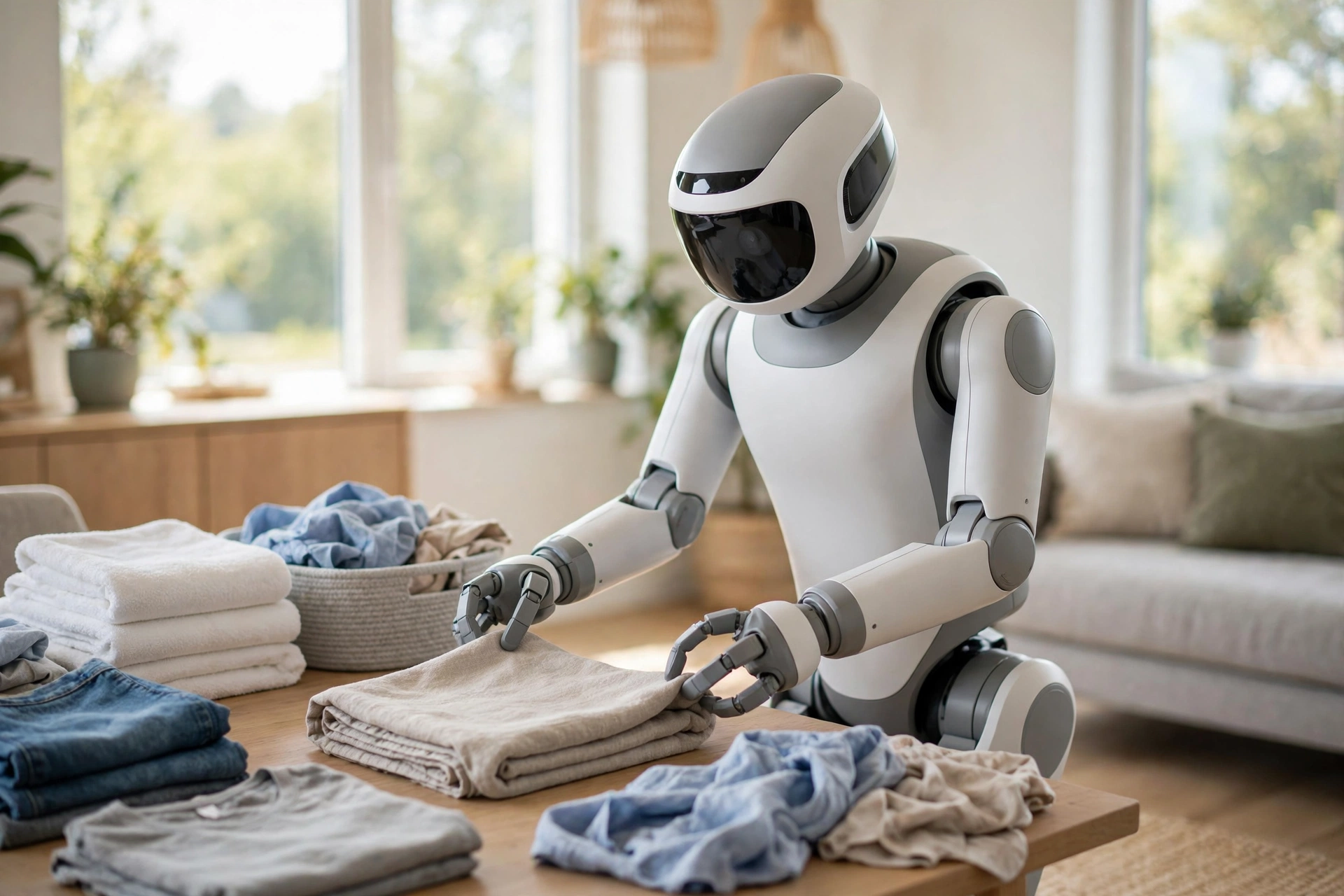
- Household tasks — folding laundry and serving pastries, jobs that need soft, careful handling.
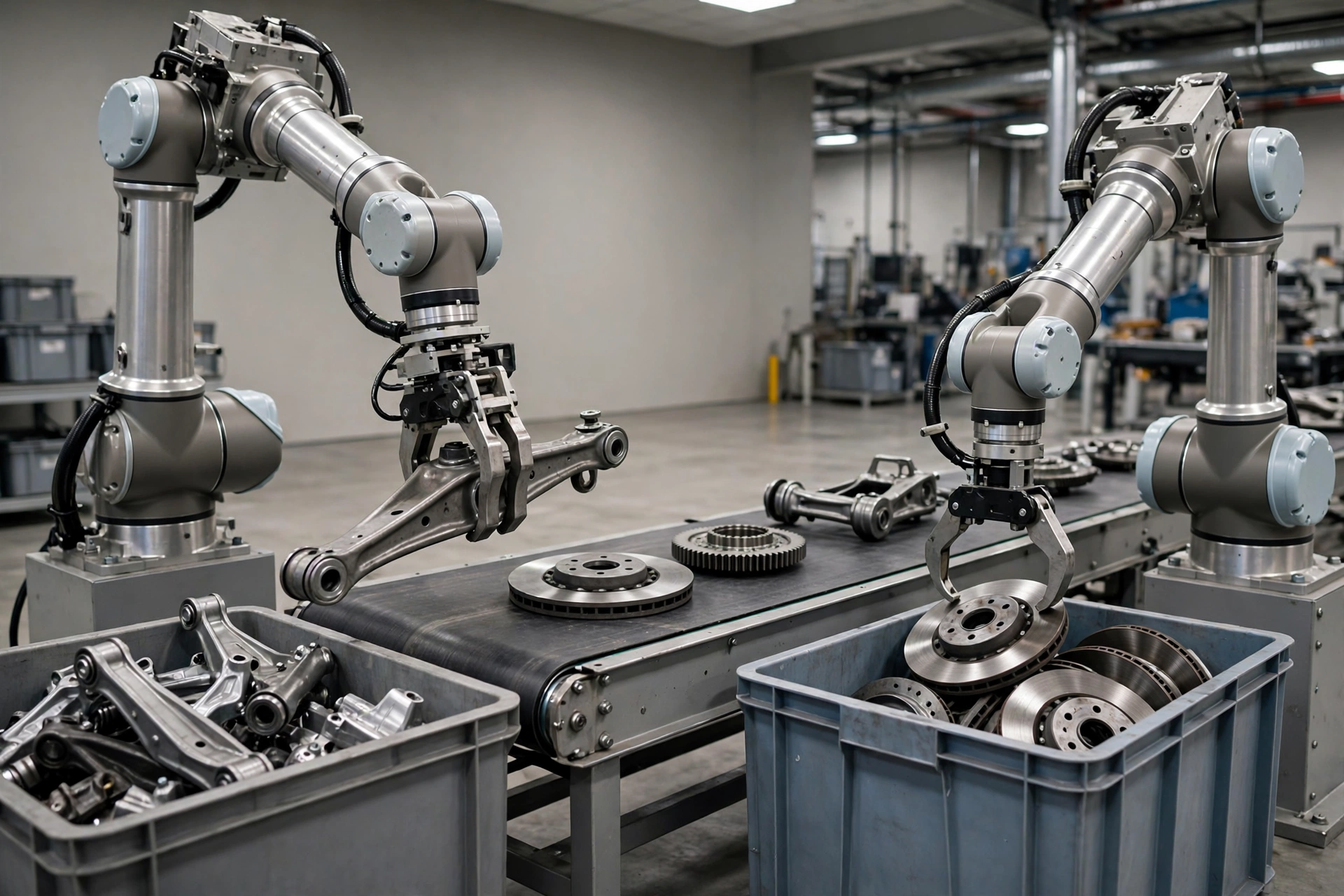
- Factory work — sorting car parts on a production line, where speed and consistency matter.
- General manipulation — picking, placing, opening, and arranging objects it has not been specifically programmed for.
The important word is “learn”. Older industrial robots repeat one programmed motion forever. A VLA-powered robot generalises — skills learned on one task transfer to similar new tasks, the same way a language model’s reading skill transfers to new topics. That generalisation is built the way we explain in our guide on how AI is created — massive training first, then adaptation to specific jobs.
Already Working in the Real World
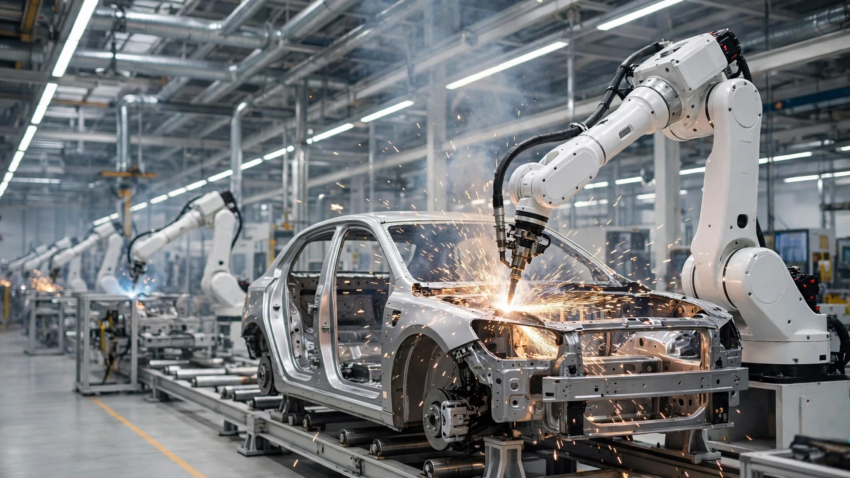
This is not only a demo video. Gemini Robotics technology is already running on a Mercedes-Benz production line — the embodied half of Google’s current AI push, launched alongside the Gemini 4 Carbon language model. A car factory is a serious test: parts vary, timing matters, and mistakes are expensive. If a robot brain can hold up there, home and warehouse uses stop sounding like science fiction.
It also connects directly to where workplace automation is heading. Office intelligent automation replaced repetitive screen work first; robotics models like this one aim at repetitive physical work next.
How Is It Different From a Normal Chatbot?
Three differences stand out:
- Output is movement, not text. A wrong answer from a chatbot costs you a correction; a wrong movement from a robot can break something — so these models are built and tested far more cautiously.
- It works in real time. A robot cannot wait ten seconds to think while holding a glass. VLA models must decide continuously as the world changes around them.
- Every environment is different. Chatbots face text, which is tidy. Robots face kitchens, workshops, and warehouses — messy, unpredictable, and never the same twice.
That is also why progress here is slower than in chatbots — and why each release, including this week’s wave of new frontier models like Tencent Hy4, is only half the story. The other half is AI leaving the screen entirely.
Can You Use Gemini Robotics 2.5?
Not directly — access is limited. DeepMind typically releases robotics models first to research and industry partners, not as a public app you can download. There is no consumer product to buy today; the robots running it belong to partner companies and labs.
What you can expect instead is the pattern AI always follows — capabilities proven in factories and partner labs this year become products in the years after. Warehouse robots, hospital assistants, and eventually home robots are the realistic path, in that order.
Why This Release Matters
Gemini Robotics 2.5 matters less for any single skill than for what it proves — the same foundation-model approach that conquered text is now working on physical action. One model, hundreds of skills, real factory deployment. The race between Google DeepMind, Tesla’s Optimus programme, and a wave of robotics startups is no longer about who builds the best robot body. It is about who builds the best robot brain — and this week, Google moved that race forward.
Frequently Asked Questions
It is Google DeepMind’s newest vision-language-action (VLA) AI model, released on November 10, 2026. It lets robots see their surroundings, understand instructions, and carry out physical tasks — from folding laundry to sorting car parts — instead of only producing text or images on a screen.
It describes an AI model that combines three abilities — vision (seeing the world through cameras), language (understanding instructions), and action (controlling a robot’s movements). The model watches a scene, understands what it is asked to do, and moves the robot to do it, adjusting in real time.
According to DeepMind, it can learn hundreds of everyday skills, including delicate household tasks like folding laundry and serving pastries, and industrial work like sorting car parts. Its technology is already running on a Mercedes-Benz production line, which is a real-world deployment, not just a lab demo.
No. Access is limited to research and industry partners, and there is no consumer product. Everyday users will meet this technology later, through robots and services built by partner companies — most likely in warehouses and factories first, and homes later.
A chatbot’s output is text, so a mistake costs little. A robotics model’s output is physical movement in a messy real-world environment, and it must decide continuously in real time. That makes robotics AI harder to build, slower to release, and much more heavily tested before deployment.
They are aimed first at repetitive, physically demanding tasks that factories already struggle to staff, and current deployments work alongside people rather than replacing whole lines. The realistic near-term change is job content shifting — fewer repetitive motions, more supervision and maintenance roles — as automation spreads gradually.

Hamad Arshad writes and edits AI Next Top from Rahim Yar Khan, Pakistan. He has worked in SEO and digital marketing for over 7 years and started this site to explain AI tools and news in plain language for non-technical readers. Every guide here is checked against the real tool before it is published.







Leave a Reply