
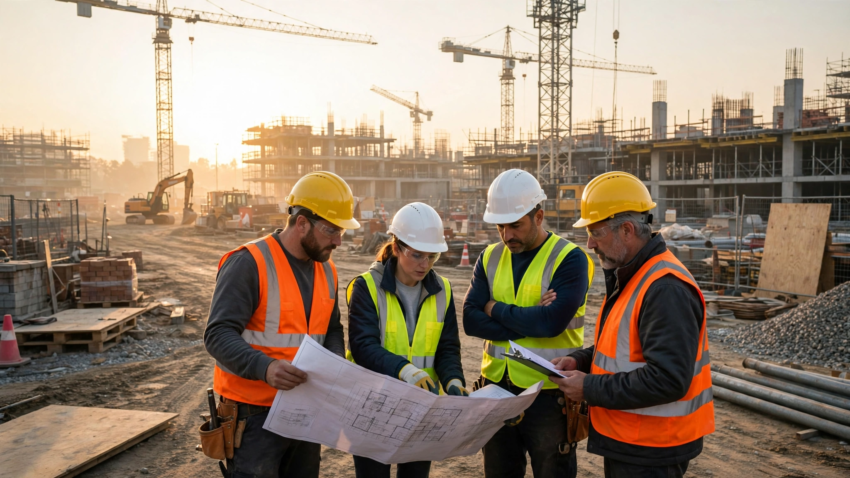
AI in Construction
Construction has a famous problem: big projects finish late and over budget so often that it barely counts as news. The reasons are human — weather, deliveries, design changes, a thousand small surprises. AI in construction is gaining ground precisely because the industry runs on plans, and plans are exactly what data-driven tools can stress-test, monitor and repair faster than a weekly meeting can.
Nobody serious suggests software will lay bricks. The change is happening in the office, the planning room and the camera feed: spotting the delay before it happens, pricing the job with fewer guesses, and watching a large site more carefully than any team of supervisors could manage alone. It is the same pattern seen in our ai manufacturing cost reduction case study — unglamorous savings, stacked patiently.
In short: AI in construction is used to estimate costs more accurately, build schedules that survive contact with reality, monitor sites for progress and safety risks through cameras, predict equipment failures, and handle project documents. It reduces the delays and overruns the industry is famous for, but it does not replace skilled trades, site judgement or the people who manage the unexpected.
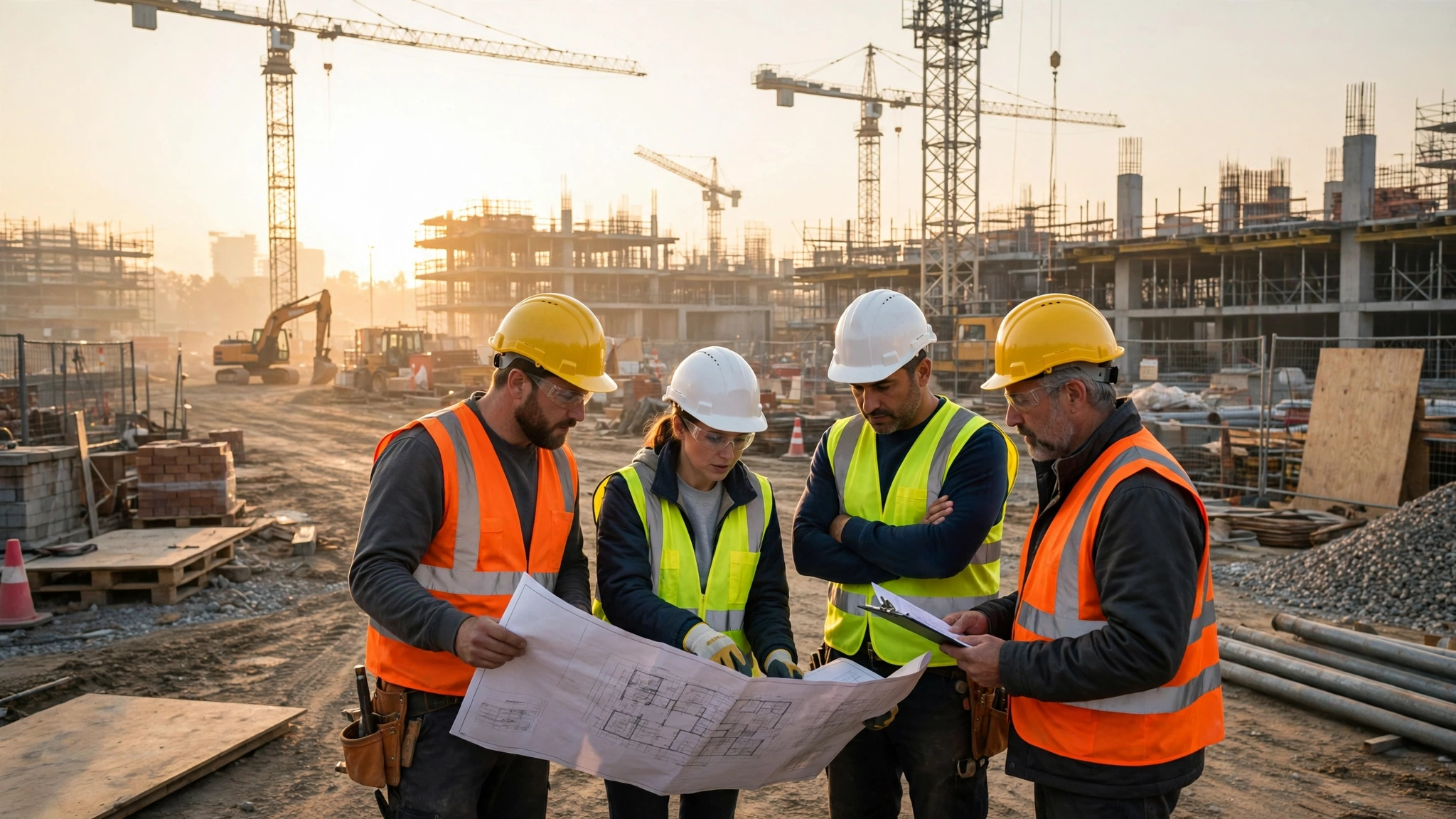
Estimating costs with fewer guesses
Every construction disaster story starts with an estimate that was wrong. Traditional estimating leans on experience and historical averages — this kind of building, in this area, cost roughly that. AI estimating tools learn from far more projects, including the ones that went wrong, and they price in the risk factors humans tend to optimism away: ground conditions, design complexity, seasonal weather, supplier reliability.
The output is not magic, and good estimators still review it line by line. But a data-backed range beats a hopeful single number, because it changes the conversation early — while the design can still be adjusted — instead of late, when the invoice arrives.
Schedules that expect the unexpected
A construction schedule is a chain of dependencies: foundations before frames, frames before roofing, everyone before the painters. One late delivery quietly pushes twenty tasks. AI scheduling tools simulate thousands of versions of the project, testing what happens if the steel is late, if rain closes the site for a week, if a key crew is shared between two jobs. For a very different multi-agent setting, see How AI Agent Swarms Behave in Minecraft.
The result is a schedule with honest buffers in the places risk actually lives, and early warning when the real project starts drifting from the plan. Managers describe the value simply: fewer surprises that arrive already expensive. Keeping these models accurate as the project evolves takes the same discipline described in our guide to what is mlops — fresh data in, constant checking, no set-and-forget.
Cameras that watch progress and safety
A large site is hard to see all at once. Camera systems with AI vision now compare the site against the plan daily: this floor should be poured by now, that scaffold run is missing its guard rails, materials delivered Tuesday are still sitting in the wrong zone on Friday. Progress reports that used to take a person a day of walking and photographing largely write themselves.
The safety use matters most. The same systems flag workers without helmets near lifting zones, vehicles reversing toward pedestrians, and unsafe crowding around machinery. No camera prevents an accident by itself — supervisors act on the alerts — but an extra set of eyes that never blinks, across a site too big for anyone to patrol fully, has obvious value in an industry where safety is the first conversation of every day.
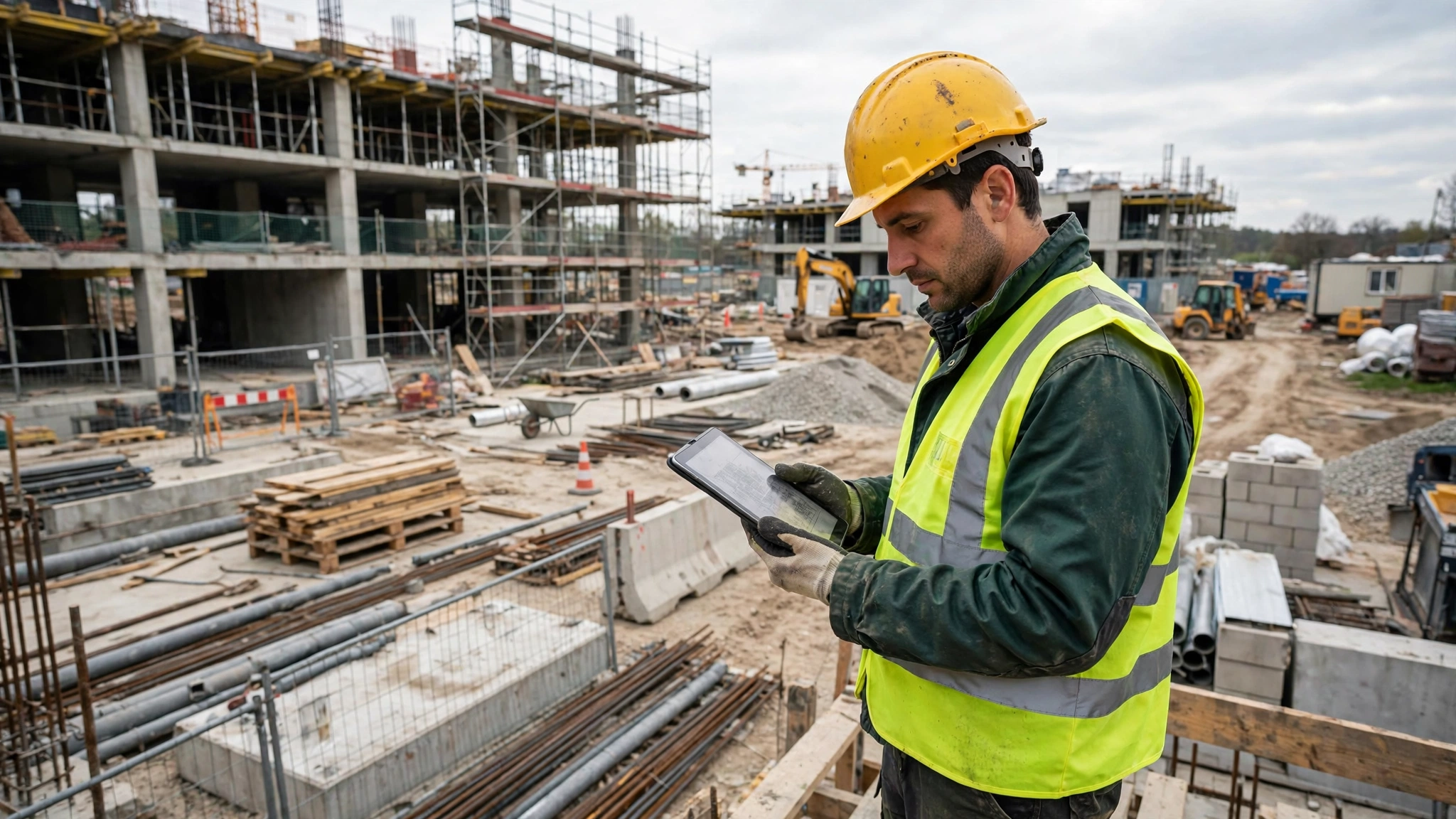
Machines that ask for maintenance first
Construction equipment fails the way factory equipment does: expensively, and at the worst moment. Sensors on excavators, cranes and generators stream the same kinds of signals — vibration, temperature, hours, load — and prediction models flag the machine that is likely to break next week rather than the one that broke this morning. The logic is identical to the different types of ai working together: prediction models on sensor data, image models on cameras, language models on paperwork. For platform design, see 3 Pillars of AI Platform Architecture.
Planned maintenance in a quiet window costs a fraction of an emergency callout with a crane standing idle and a crew being paid to watch it.
Paperwork, drawings and documents
Construction runs on documents: drawings, permits, contracts, change orders, inspection reports. Language AI now reads and cross-checks them — flagging where the drawing revision and the contract specification disagree, summarising a two-hundred-page report into the six decisions it contains, and keeping the change history searchable instead of buried in email. For another AI system, see What Is Kimi AI.
This is the least visible use and the one office teams feel first. Disputes in construction are often really document problems — who agreed what, in which version — and an assistant that answers those questions in seconds turns arguments into lookups.
What AI cannot do on a building site
The physical world still wins arguments. AI cannot judge that the ground feels wrong underfoot, calm a difficult client meeting, or improvise when a delivery arrives damaged and the schedule has no slack. Skilled trades remain stubbornly human: the judgement in a craftsperson’s hands is the product of years, not datasets.
There is also an honesty point about data. AI tools are only as good as the project information fed into them, and an industry that still partly runs on paper, phone calls and memory has groundwork to do. The sites gaining most are the ones that digitised their records first — the same lesson factories learned, and the same growing pains described in our look at ai model deployment challenges production in live environments. Data infrastructure debates are also covered in Why Are Data Centers Controversial.
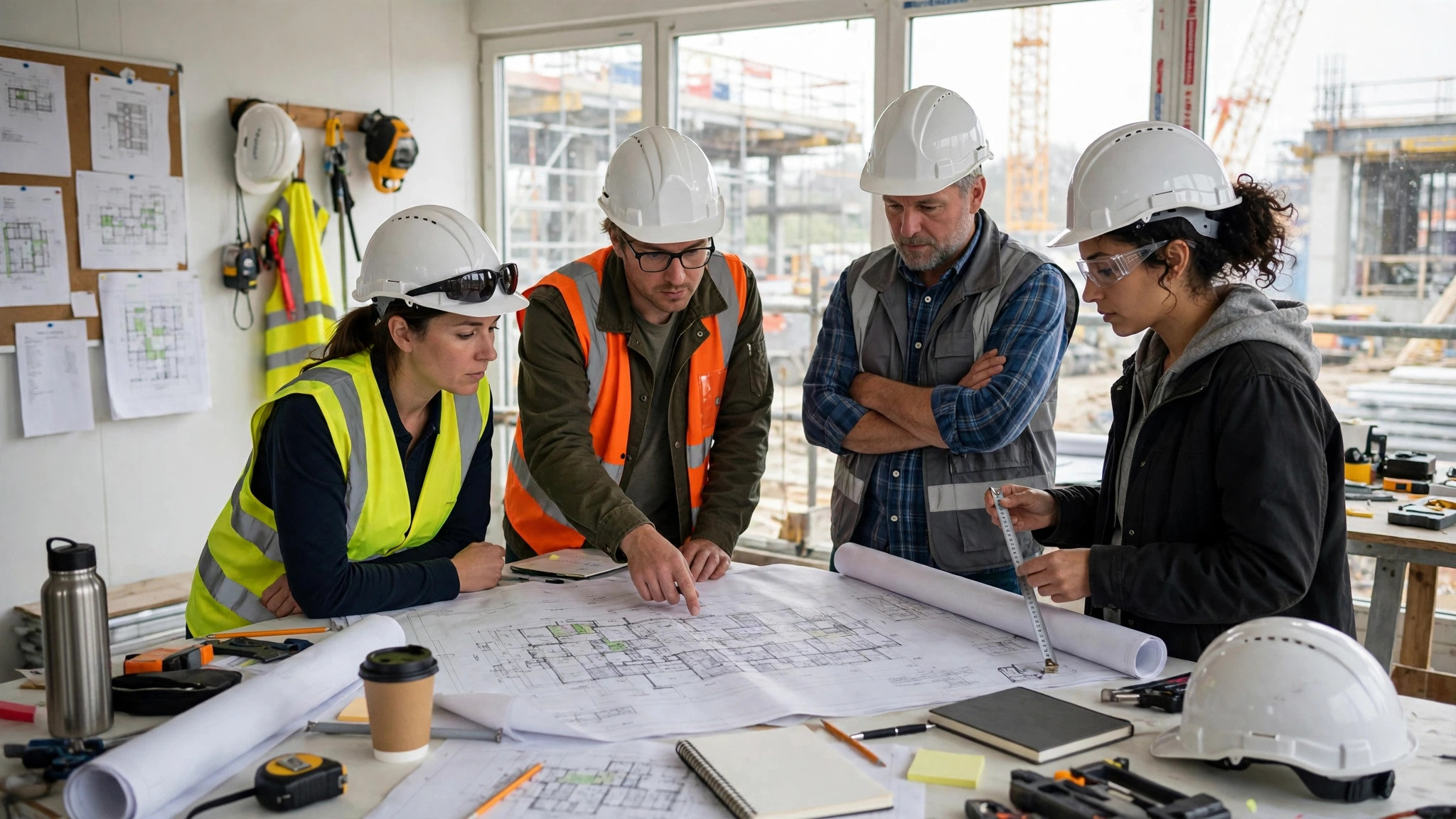
Where this leaves the industry
AI will not fix construction’s reputation in one product cycle. But the direction is clear: estimates with honest ranges, schedules that admit risk exists, sites watched closely enough that small problems stay small. The companies adopting it fastest treat it as better instrumentation for experienced people — not as a replacement for the experience. A similar policy debate in gaming is covered in Valve Steam AI Games Cloning Policy.
For anyone entering the industry, that is quietly good news. The premium skill of the next decade is not competing with the software. It is being the person who can read what the software says, and know when the site in front of them disagrees. For career guidance, see Sam Altman Advice for Young Workers in the AI Age.
Frequently asked questions
Mainly in planning and monitoring: more accurate cost estimates, schedules tested against thousands of what-if scenarios, camera systems tracking progress and safety, predictive maintenance for machinery, and tools that read and cross-check project documents.
It helps with the main causes of delay: unrealistic schedules, late-spotted problems and equipment breakdowns. AI cannot control weather or suppliers, but earlier warnings and honest buffers mean fewer delays are discovered only when they have already become expensive.
Camera systems flag risks like missing helmets, unsafe zones around lifting equipment and vehicles moving near pedestrians, and alert supervisors in near real time. They act as extra eyes across large sites; people still make and enforce the safety decisions.
The evidence so far points to AI taking planning, monitoring and paperwork tasks, not trade skills. Physical work, craft judgement and handling the unexpected remain human, and the industry faces labour shortages that make assistance more valuable than replacement.
Digital records come first: project documents, drawings, costs and schedules in systems the AI can read. Firms that digitise one workflow — estimating or progress tracking, for example — and prove the value there tend to expand successfully.
Costs vary from modest subscriptions for estimating and document tools to major investments in site-wide monitoring. Most firms start with one painful problem, such as overrun-prone estimates, measure the improvement, and let the savings fund the next step.

Hamad Arshad writes and edits AI Next Top from Rahim Yar Khan, Pakistan. He has worked in SEO and digital marketing for over 7 years and started this site to explain AI tools and news in plain language for non-technical readers. Every guide here is checked against the real tool before it is published.








Leave a Reply