
AI Manufacturing Cost Reduction Case Study
Every factory manager knows the same quiet fear: the line stopping. An unplanned halt on a busy production line can burn through thousands in an hour — idle staff, late orders, rush shipping to apologise to a customer. So when people look for an AI manufacturing cost reduction case study, they are usually not chasing science fiction. They want to know where the money actually gets saved, in plain numbers and plain language.
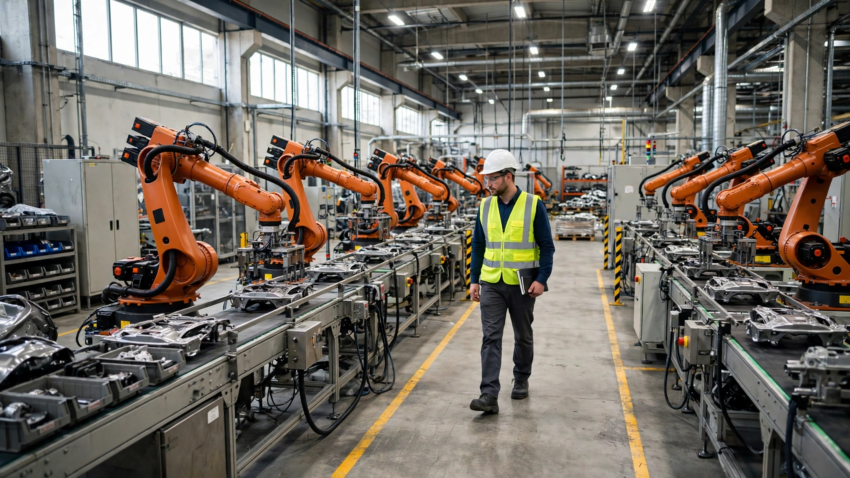
This article walks through the pattern that shows up again and again when manufacturers adopt AI: not one dramatic robot takeover, but a series of unglamorous savings that stack up — fewer breakdowns, fewer defective products, lower energy bills, and schedules that waste less time. Think of it as a composite case study, drawn from the results factories commonly report when these systems are put to work.
In short: Manufacturers cut costs with AI mainly in four places. Predictive maintenance stops expensive breakdowns before they happen. Camera-based quality checks catch defects early, when fixing them is cheap. Energy systems trim power waste in heating, cooling and idle machines. And smarter scheduling squeezes more output from the same line. The savings arrive gradually over months, not in one big moment, and they depend on decent data from the machines. For product-hunting tools, see Best AI Tools for Product Hunting in 2027 The Top 10 Compared by Use Case.
The starting point — a factory leaking money in small ways
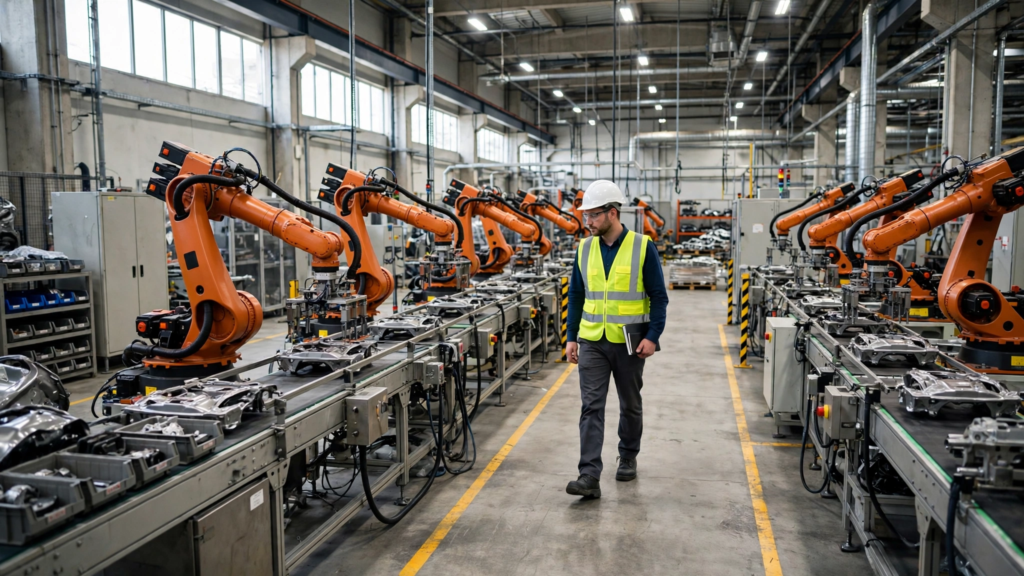
Picture a mid-sized plant making metal components. Nothing is dramatically broken. Orders ship, customers stay. But look closer and the leaks are everywhere. A key machine fails without warning about once a month, stopping the line for half a day each time. Around three products in every hundred come back as rejects. The energy bill is the second biggest cost after wages, and nobody can say exactly where the power goes. Overtime is constant because schedules are built on guesswork.
This is the normal starting point for most AI projects in manufacturing — not a disaster, just steady waste that everyone has learned to live with. The value of AI here is that it sees patterns across thousands of hours of machine data that no busy human team could watch manually. Understanding what is mlops matters from the start, because these models need looking after once they are live, not just installing once and forgetting.
Saving one — predicting breakdowns before they happen
The first and usually biggest saving comes from predictive maintenance. Sensors on motors, presses and pumps record vibration, temperature and sound around the clock. An AI model learns what healthy sounds like for each machine, then flags the small changes that tend to appear days or weeks before a failure.
The cost difference is stark. An emergency breakdown means a stopped line, rushed spare parts, and engineers working under pressure. A planned repair during a scheduled quiet window costs a fraction of that, and the line keeps its promises to customers. Plants that adopt this approach commonly report unplanned downtime falling by a third or more once the system has a few months of data to learn from.
There is a mindset change hidden in this saving. Maintenance stops being about reacting fastest and becomes about noticing earliest — a quieter job, and a much cheaper one.
Saving two — catching defects while they are still cheap
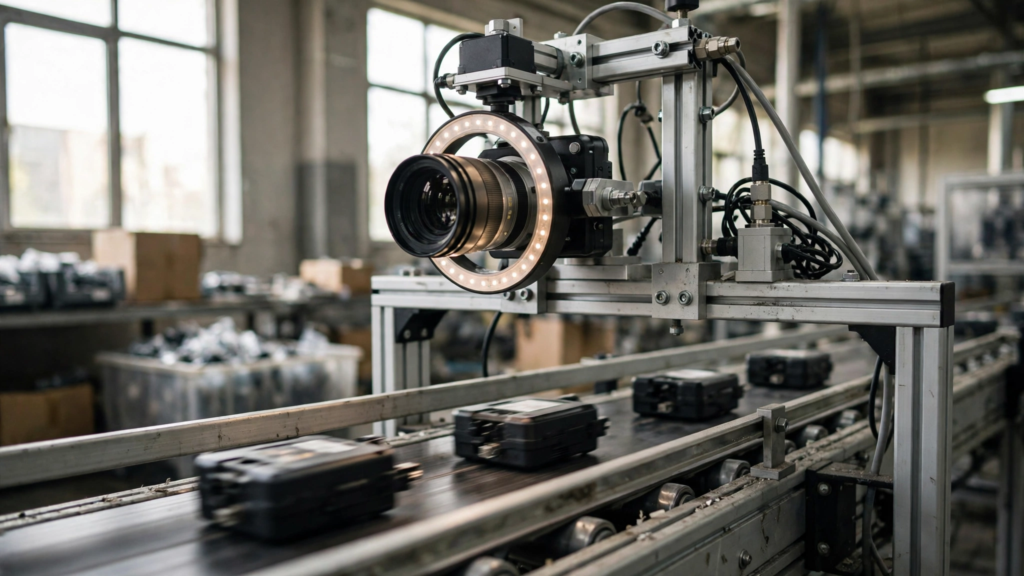
A defective part caught at the machine costs pennies. The same part caught by the customer costs returns, replacements, shipping, and trust. Camera systems with AI vision now watch products on the line and spot scratches, misalignments and missing components at speeds no human inspector could sustain.
In our composite plant, the reject rate that used to sit around three in a hundred fell below one in a hundred after vision checks were added at two points on the line. Just as valuable, the system records which defects appear and when, turning quality from a blame exercise into data. When a particular defect spikes every time a certain batch of raw material arrives, that conversation with the supplier gets much easier.
This is also where expectations need care. Rolling out detection on a live line is exactly the kind of job described in our look at ai model deployment challenges production teams face — messy real-world data, changing conditions, and the need to keep the old process running while the new one learns. For a different multi-agent example, see How AI Agent Swarms Behave in Minecraft.
Saving three — the energy bill nobody was watching
Factories pay for a lot of power that does no work. Machines idling between jobs. Heating and cooling fighting each other across a big building. Compressors running at full tilt for a task that needs half. Because these costs arrive as one monthly bill, they hide in plain sight.
AI systems that watch energy use machine by machine can point at the waste precisely: this press drew full power all weekend, that cooling unit cycles twice as often as its twin. Acting on those findings — automatic shutdowns, smarter start-up sequences, repairs to the one odd machine — commonly trims a plant’s energy spend by a noticeable single-digit percentage. On a big bill, that percentage is real money every single month, and it keeps saving long after the project is forgotten.
Saving four — schedules built on reality instead of hope
The last saving is the least visible and often the most argued about. Traditional production schedules assume average changeover times, average machine speeds and average everything. Reality is never average. AI scheduling tools learn the actual patterns — which jobs really take longer, which machine pairs work well together, where queues form — and build plans that waste less time between jobs.
The result in plants that do this is fewer overtime surprises, less half-finished work sitting around, and delivery dates the sales team can quote with a straight face. It is not glamorous. It is also the kind of saving that compounds, because every week starts from a better plan than the last.
What the numbers look like after a year
Pull the four savings together and the composite picture after roughly a year looks like this. These are the ranges factories typically describe, not a promise for any single plant.
| Area | Before AI | After about a year |
|---|---|---|
| Unplanned downtime | A costly stop most months | Down by roughly a third to a half |
| Product rejects | Around 3 in every 100 | Below 1 in every 100 |
| Energy spend | One unexplained monthly bill | Down by a single-digit percentage, itemised |
| Overtime | Regular and reactive | Planned and noticeably lower |
| Maintenance style | Fix it when it breaks | Planned repairs in quiet windows |
Two honest footnotes belong with any table like this. First, the first few months often look flat while the systems gather data and staff learn to trust the alerts — the savings curve bends later, then steadies. Second, none of it works on broken data. Factories whose machines have no sensors, or whose records live in scattered spreadsheets, have to fix that foundation first. Most of the tooling underneath is built with the approach covered in our python for aiguide, and it is only as good as the data fed into it.

Lessons any factory can borrow from this case
You do not need a giant budget to copy the pattern. Start with the most expensive pain, not the most exciting technology — for most plants that is downtime. Instrument one line properly before touching the rest of the building. Keep the humans in charge: the best results come when experienced operators treat AI alerts as a second opinion they can question, not orders they must obey. For students, see Best Free AI Study Planner App for College Students – 7 Top Picks.
And measure honestly from day one. The plants that benefit most are the ones that wrote down their reject rates, downtime and energy costs before anything was installed, because they can prove what changed — to their bosses, and to themselves. For career guidance, see Sam Altman Advice for Young Workers in the AI Age.
Frequently asked questions
It varies by plant, but the commonly reported pattern is meaningful rather than magical: unplanned downtime down by a third or more, reject rates cut by half or better, and energy savings in the single-digit percentages. On a large factory budget, those percentages add up to serious money over a year.
Predictive maintenance is the usual answer, because breakdowns are the most expensive surprise a factory faces and the payback is easy to measure. Quality inspection cameras are a close second, especially where customer returns are costly or embarrassing.
Expect a few quiet months first. Models need operating data to learn from, and staff need time to build trust in the alerts. Most plants describe the savings becoming clear within the first year, with the curve improving as more data accumulates.
The pattern so far is changed jobs more than vanished ones. Repetitive inspection and manual monitoring shrink, while work shifts toward supervising systems, handling exceptions and improving processes. Factories usually adopt AI because they cannot find enough skilled staff, not because they have too many.
Working sensors on the machines that matter, records that live in one place instead of scattered spreadsheets, and a clear note of current costs so improvements can be proven. Without that foundation, even good software has nothing reliable to learn from.
Usually because of messy data, unrealistic timelines, or tools bought for excitement rather than for a specific expensive problem. Projects that start with one clear cost target, honest measurements and the operators involved from the beginning have a far better record.

Hamad Arshad writes and edits AI Next Top from Rahim Yar Khan, Pakistan. He has worked in SEO and digital marketing for over 7 years and started this site to explain AI tools and news in plain language for non-technical readers. Every guide here is checked against the real tool before it is published.








Leave a Reply